Inspiration50

20 Aug 20264 minutes to read
Investment IdeaHow Biosimilars Are Becoming a Growth Driver for Sandoz
Just a few years ago, Sandoz was known primarily as a generic drug specialist. Today, biosimilars are increasingly taking center stage. In the first half of 2026, they emerged as the company’s most important growth driver. While the traditional generic drug business faces price pressure, Sandoz is benefiting from a billion-dollar market that is rapidly gaining importance as numerous patents on biologic drugs expire.
Vontobel Markets

23 Apr 20266 minutes to read
Investment IdeaA solid start to the US earnings season
This week's focus is on the impact of rising oil and energy prices in light of increasing tensions between Iran and the United States over the Strait of Hormuz. Add to this the damage to energy infrastructure in the Gulf region and the outlook for US energy companies such as Chevron could improve by mid-2026. In the meantime, the reporting season for the first quarter of 2026 has gotten off to a good start in the US, with 88% of S&P 500® companies reporting positive earnings surprises so far.
Carlsquare (Sponsored by Vontobel)

3 Jun 20265 minutes to read
Investment IdeaUS indices are still benefiting from their exposure to artificial intelligence
This week we focus on the European Stoxx index, which may be able to recover some of its losses versus US equities since the start of the war in March - particularly in the AI sector - if the Strait of Hormuz reopens. Several well-known companies are represented in the Stoxx index, including ASML, LVMH, SAP and TotalEnergies.
Carlsquare (Sponsored by Vontobel)

5 Oct 202611 minutes to read
Investors’ OutlookInvestors’ Outlook: A Shorter Leash
The Fed delivered its first interest-rate hike in three years, and several other central banks around the world have already done the same. With rate increases having resumed across major economies, the global easing cycle has effectively come to an end. But much of the inflationary pressure central banks are responding to stems from supply-side factors, such as higher oil prices and the lingering effect of tariffs, which monetary policy can’t do much about. As such, the scope for additional tightening is likely limited.
Stefan Eppenberger, Christopher Koslowski, Mario Montagnani, Michaela Huber & Clémence Rusek
29 Apr 20265 minutes to read
Investment IdeaFocus on earnings and inflation
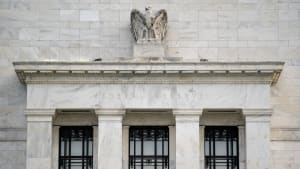
This week, central bank interest rate announcements and the interim reporting season for the first quarter are in the spotlight. The case of this week focuses on interest rate developments in the U.S. and the Federal Reserve's upcoming decisions. In seems that there are more factors indicating higher inflation within a year than lower inflation. The Q1 2026 earnings season revealed a significant number of positive earnings surprises, especially among S&P 500® companies.
Carlsquare (Sponsored by Vontobel)
Know-How3

30 Sep 20253 minutes to read
Know-HowWhy trading times of the underlying asset play a role in leverage products
For individuals who invest in Knock-Out products such as Warrants with Knock-Out or Mini Futures, it is crucial to know when and under what conditions their product can be knocked out. But what many do not know: The trading times of the underlying asset play a decisive role here. If the underlying is not a share or an index, the trading times of the underlying and the product may diverge.
Vontobel Markets

23 Oct 20235 minutes to read
Know-HowWarrants with Knock-Out: How they work
Warrants with Knock-Out provide investors with a leveraged participation in the performance of a financial asset. The leverage effect arises from the fact that less capital is required compared to a direct investment. Investors can speculate on both rising and falling prices with less capital invested. Various asset classes such as stocks, indices, commodities, precious metals, interest instruments, or currency pairs are available.
Vontobel Markets

16 Oct 20235 minutes to read
Know-HowWhat are Structured Products?
Structured products are adaptable instruments. Not just for speculation, but more importantly to enhance returns or even to hedge a portfolio. Investors can position themselves for rising, falling or even sideways movements. Therefore, structured products offer solutions for many market environments and can be adapted to an investors’ market expectations. The ability to tailor investments to the expectations of investors is one of the most important advantages of structured products. As a result, structured products offer an interesting alternative to direct investments.
Vontobel Markets