Long-term growth creates opportunities in the aviation industry

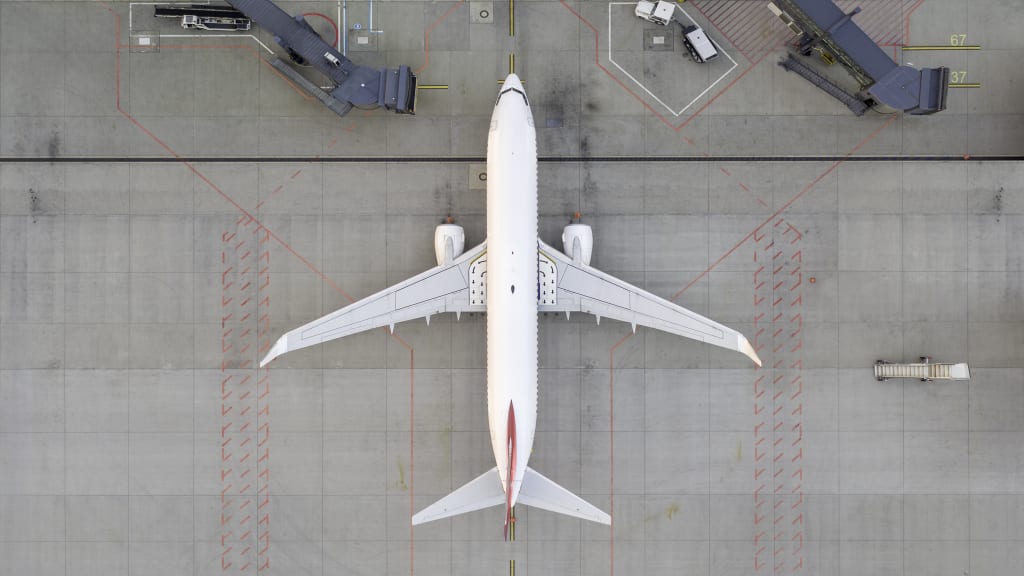
The long-term outlook for the aviation industry remains attractive. The International Air Transport Association (IATA) expects global demand for air travel to more than double by the middle of the century (IATA, 17.03.2026). Increased mobility and growing trade flows are likely to contribute to airlines continuing to expand and modernize their fleets. Against this backdrop, Airbus and MTU Aero Engines are among the companies whose business performance is closely linked to the air travel market.
Robust Demand Despite Mixed Signals
Industry data for September 2026, released on October 29, 2026, by the International Air Transport Association (IATA), shows that the aviation sector continues to operate in a generally positive environment. Air cargo has shown particularly strong growth recently. Global demand, measured in cargo ton-kilometers (CTK), rose by 7,7 percent year-over-year in September 2026. In international traffic, growth even reached 8,6 percent. This trend was supported by a 3,6 percent increase in global trade, marking the 42nd consecutive month of positive year-over-year growth (IATA, 29.10.2026).
Air freight is considered an important leading indicator of global economic trends. The strong growth therefore signals not only robust trade activity but also sustained high demand for international transport capacity. In addition to airlines, aircraft manufacturers and providers of maintenance services are also benefiting from this trend. At the same time, kerosene prices rose by 103,4 percent compared to the previous year, thereby increasing cost pressures in the industry (IATA, 29.10.2026).
Passenger traffic, by contrast, showed less dynamic growth. According to IATA, global demand in September 2026 was 0,5 percent below the previous year’s level (IATA, 30.10.2026). Despite the recent subdued performance in the passenger business, the high order backlogs of aircraft manufacturers and statements from leading industry companies point to continued positive long-term prospects for the aviation industry.
Airbus: Record Order Backlog Provides a High Degree of Planning Certainty
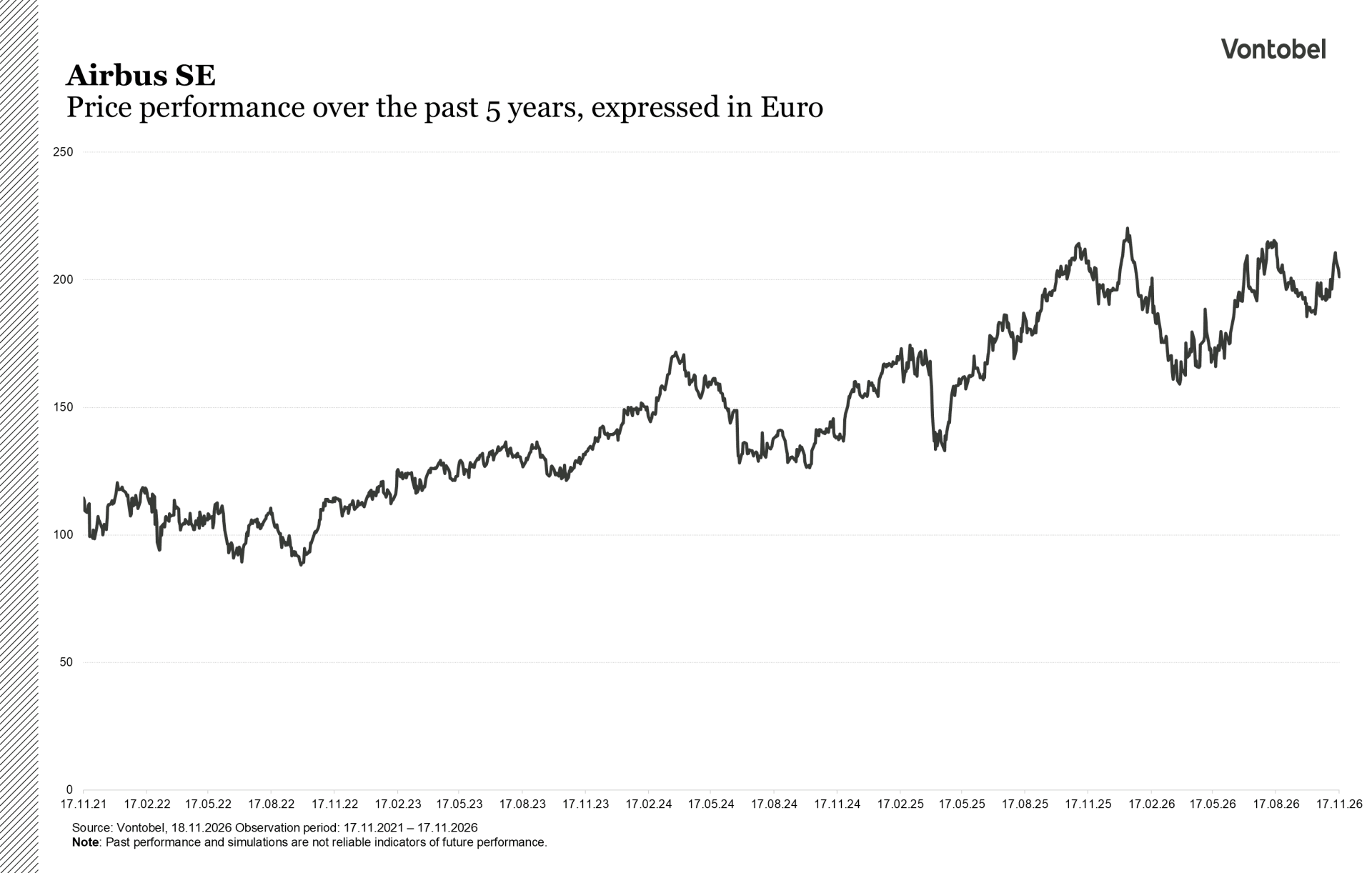
According to Airbus’s annual report for the first nine months of 2026, demand for new commercial aircraft remained high. In the first nine months of 2026, order intake in the Commercial Aircraft segment rose by 115 percent to 1 105 aircraft. At the same time, the order backlog increased to 9 310 aircraft. This gives Airbus an order backlog that enhances visibility for future deliveries. Revenue, EBIT, and net income also showed positive growth compared to the previous year (Airbus, 9M 2026 Results, 28.10.2026).
The strong order book aligns with the positive air cargo data. The key challenge for Airbus therefore lies less on the demand side than in operational execution. Although revenue, EBIT, and net income increased, free cash flow remained negative after nine months (Airbus, 9M 2026 Results, 28.10.2026). Investors are therefore wondering how efficiently the company will be able to translate the high demand into deliveries, cash flows, and ultimately higher profits in the future.
According to AeroTime, Airbus is sticking to its goal of delivering around 870 aircraft for the full year. By the end of October, 695 aircraft had already been delivered to customers, 74 of them in October alone. This underscores expectations of a strong final quarter (AeroTime, 6.11.2026). At the same time, Reuters noted that while Airbus traditionally makes a large portion of its deliveries toward the end of the year, it has repeatedly had to reduce its delivery targets in the past due to engine shortages and general supply chain issues. Operational execution is therefore likely to remain of central importance for the company’s future development (Reuters, 5.11.2026).
The positive industry outlook is offset by risks. These include, in particular, a slowdown in global economic growth, geopolitical tensions, ongoing supply chain issues, and rising energy prices. These factors could dampen demand for aircraft and maintenance services.
Callable Barrier Reverse Convertible on Airbus SE
Constant-Leverage Certificates on Airbus SE
MTU Aero Engines: Direct Beneficiary of Rising Aviation Activity
According to the International Air Transport Association (IATA), global air cargo demand has recently shown robust growth. While Airbus is benefiting primarily from new aircraft orders, MTU Aero Engines could benefit in particular from the high utilization rates of global aircraft fleets and the demand for maintenance services (IATA, 29.10.2026; MTU 9M 2026 Presentation, 29.10.2026).
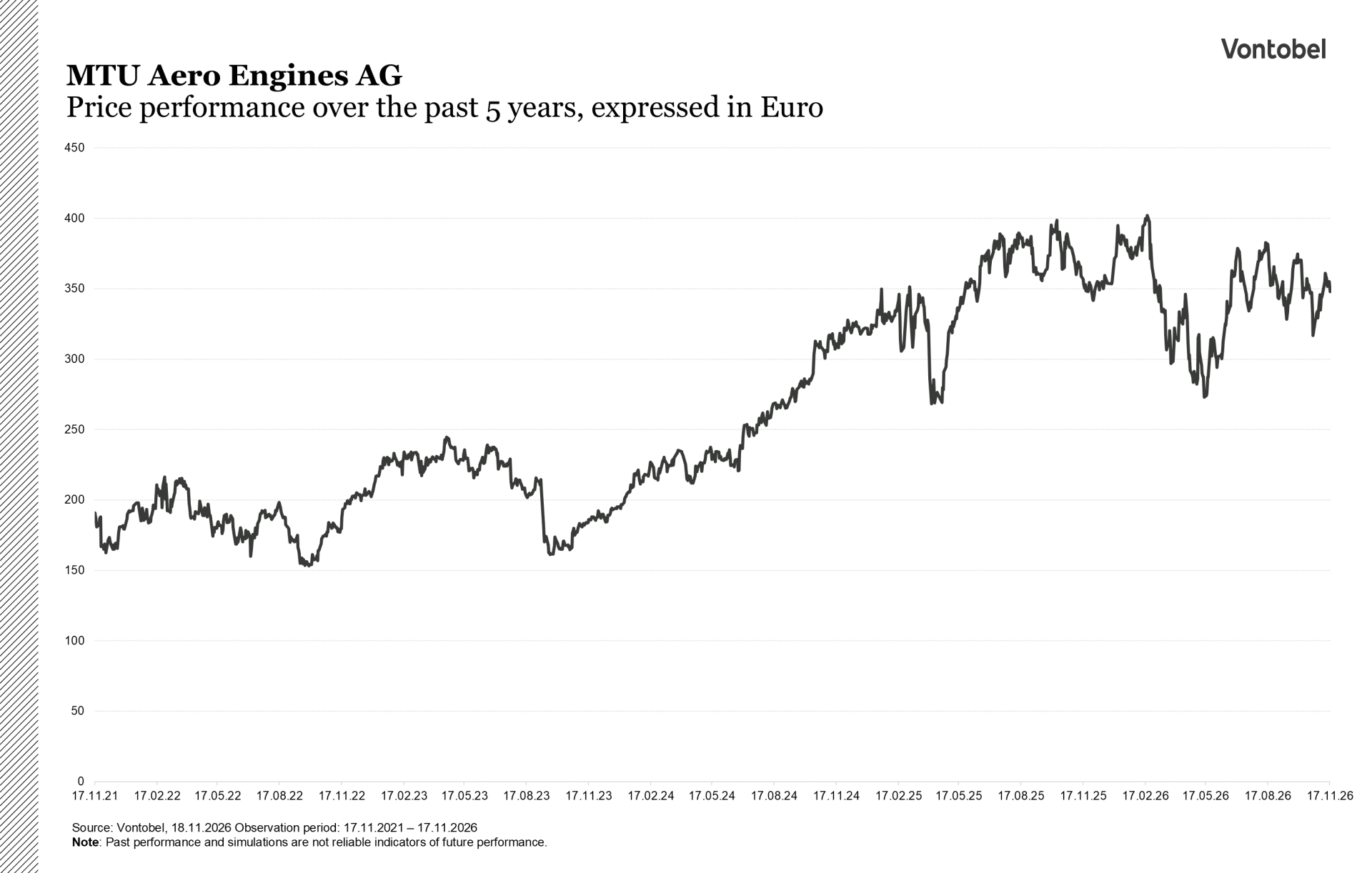
This trend is already reflected in the latest financial results. In the first nine months of 2026, revenue rose by 13 percent to 7.1 billion euros, while adjusted EBIT increased by 5 percent to 1.04 billion euros. The maintenance business performed particularly well, with revenue rising 19 percent to 5.1 billion euros. At the same time, the segment’s operating profit improved by 15 percent to 408 million euros. Management also emphasized that demand for engines and maintenance services continues to exceed supply and that supply chain issues represent the biggest bottleneck (MTU 9M 2026 Presentation, 29.10.2026).
Another positive development worth noting is the cash flow trend. Free cash flow rose by 67 percent to 466 million euros in the first nine months of 2026. At the same time, MTU raised its revenue forecast for the full year. Reuters reported in late October that strong growth in the maintenance business, in particular, had made the upward revision possible. This trend illustrates that MTU is benefiting from the high utilization rate of the global aircraft fleet and the resulting demand for maintenance (MTU 9M 2026 Presentation, 29.10.2026; Reuters, 29.10.2026).
Discount Certificate on MTU Aero Engines Holdings AG
Constant-Leverage Certificates on MTU Aero Engines Holdings AG
Two Companies, One Industry Trend
The aviation industry is benefiting from attractive long-term growth prospects and continued robust demand. Airbus and MTU Aero Engines offer different opportunities to capitalize on this trend.
Airbus has a record order backlog and the prospect of rising deliveries. However, the key question will be whether this strong demand can be sustainably converted into cash flows and profits. MTU appears to benefit more directly from the high utilization of the global aircraft fleet, as rising flight hours lead directly to higher demand for maintenance services.
Thus, both companies address different aspects of the same trend: the long-term rise in demand for air travel. While Airbus is heavily dependent on successfully fulfilling its order backlog, MTU offers the opportunity to directly benefit from the increasing utilization of existing aircraft fleets.