When an aging society becomes a driver of growth

The world’s population is aging. Thanks to medical advances and improved living conditions, life expectancy is steadily rising, while birth rates are declining in many countries. According to the World Health Organization (WHO), the number of people over the age of 60 worldwide is expected to rise from 1.1 billion in 2023 to 1.4 billion by 2030 and 2.1 billion by 2050 (WHO, Oct. 1, 2025). This demographic shift presents challenges for societies, but at the same time opens up new opportunities for companies in the healthcare sector.
Rising healthcare needs as a result of demographic change
As people age, the likelihood of suffering from chronic illnesses or requiring medical assistance increases. The Organization for Economic Cooperation and Development (OECD) notes that older adults more frequently require assistance with daily activities and that the need for long-term care is expected to continue to rise in the coming years (OECD, 10.04.2026).
At the same time, the need for medical treatment is growing. Already today, about one in three surgical patients is 65 years of age or older. In the U.S. alone, approximately five million older adults undergo surgery each year. By 2060, this number could even double (National Library of Medicine, 3.10.2025). The aging population is therefore likely not only to increase healthcare spending but also to further drive demand for diagnostics, medical technology, and healthcare services.
Siemens Healthineers is committed to modern healthcare infrastructure
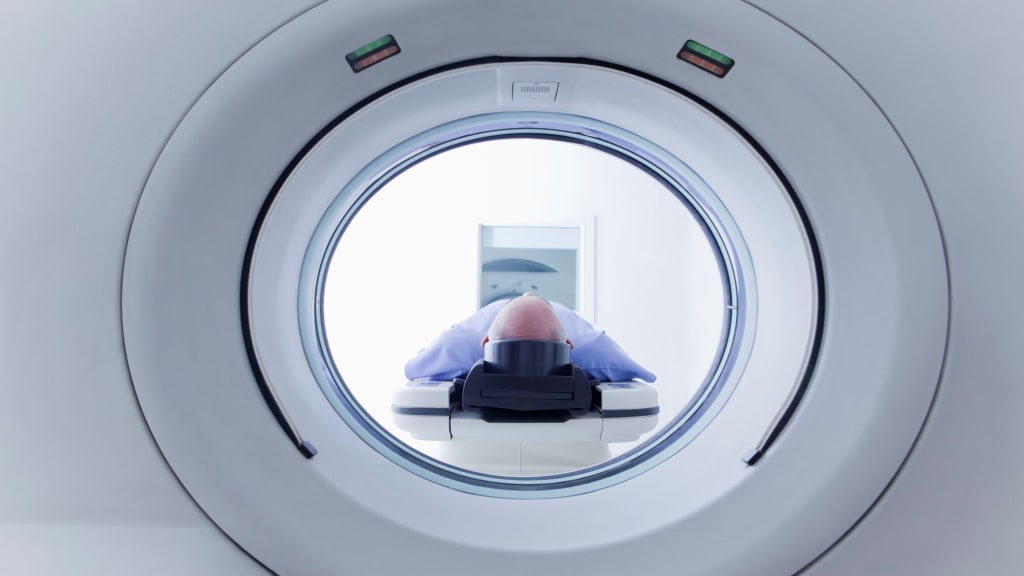
Against this backdrop, Siemens Healthineers could benefit from the aging population. Imaging techniques such as MRI and CT systems play a central role in the diagnosis of numerous age-related diseases. With an increasing number of older people, demand for these technologies could therefore also rise. At the same time, healthcare systems worldwide face the challenge of efficiently caring for a growing number of patients.
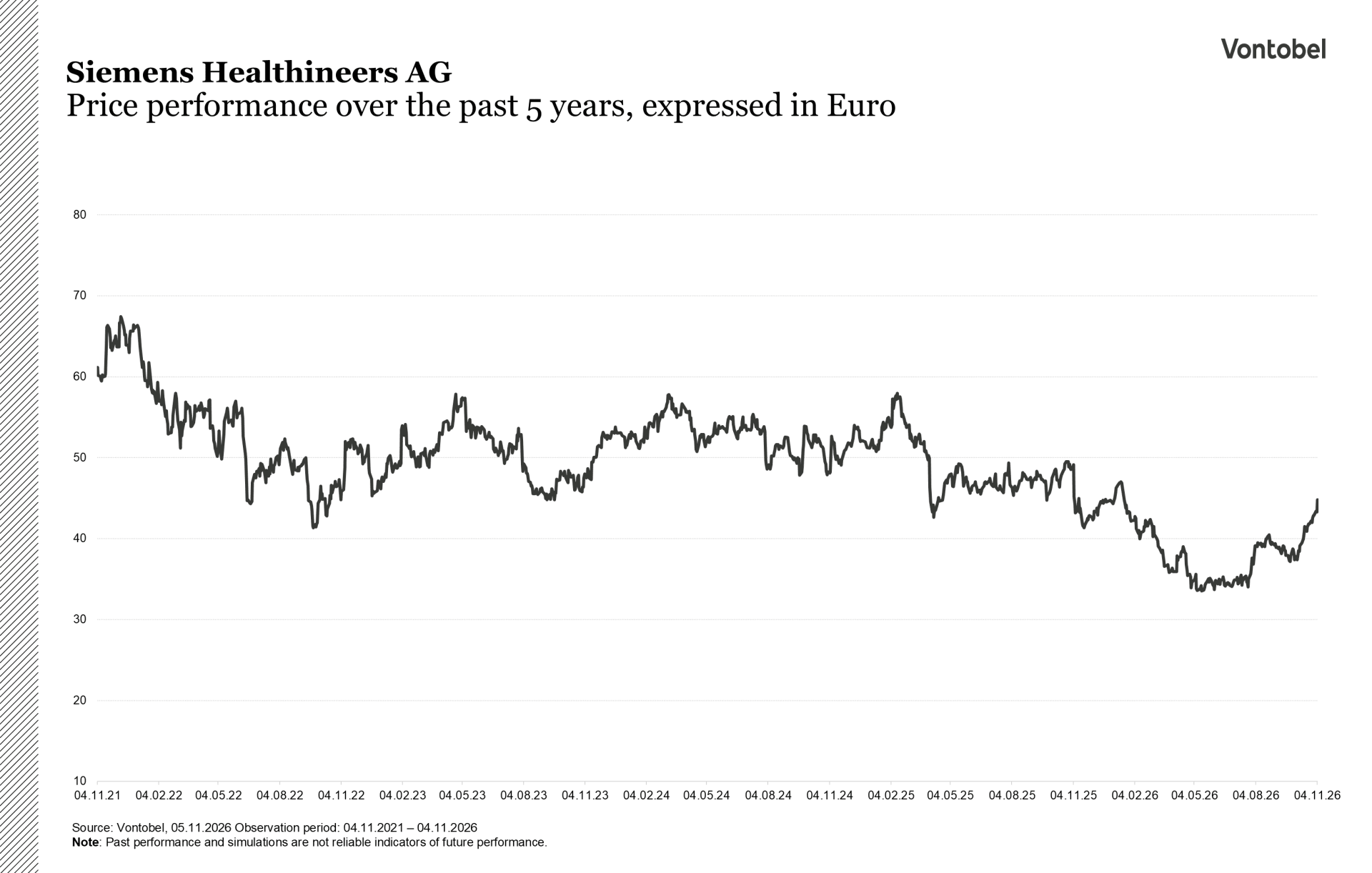
The business model is fundamentally aligned with this trend. In the third quarter of fiscal year 2026, Siemens Healthineers reported revenue growth of 2,3 percent in the Imaging segment and 9,2 percent in the Precision Therapy segment. At the same time, the book-to-bill ratio for large-scale equipment stood at 1.27, indicating continued robust demand (Siemens Healthineers Q3 Earnings Release, 31.07.2026).
However, the business performance also shows that long-term megatrends do not automatically lead to sustained growth in corporate profits. The Diagnostics business posted a 5,5 percent decline in revenue in the third quarter (Siemens Healthineers Q3 Earnings Release, 31.07.2026). In addition, Siemens Healthineers lowered its full-year forecast in the summer of 2026. Reasons for this included challenges in the Chinese market and the transition to a new laboratory platform (Reuters, 31.07.2026).
At the same time, profitability remained at a high level: The adjusted EBIT margin stood at 19,1 percent, while net income rose by 21,7 percent compared with the same quarter of the previous year to 676 million euros (Siemens Healthineers Q3 Earnings Release, 31.07.2026).
Reverse Convertible on Siemens Healthineers AG
Multi-Barrier Reverse Convertible
Humana benefits from an older customer base
Humana is also closely linked to demographic change. The U.S. corporation focuses heavily on healthcare solutions for older adults and emphasizes the growing importance of this demographic in its own publications. As the baby boomer generation enters older age groups, the number of potential policyholders is steadily increasing.
At the same time, this trend highlights the challenges it presents. More chronic conditions, increasing long-term care needs, and greater use of medical services are putting mounting cost pressure on healthcare systems. For health insurers, this can present both opportunities and risks. On the one hand, demand for healthcare services is growing; on the other hand, costs are also rising.
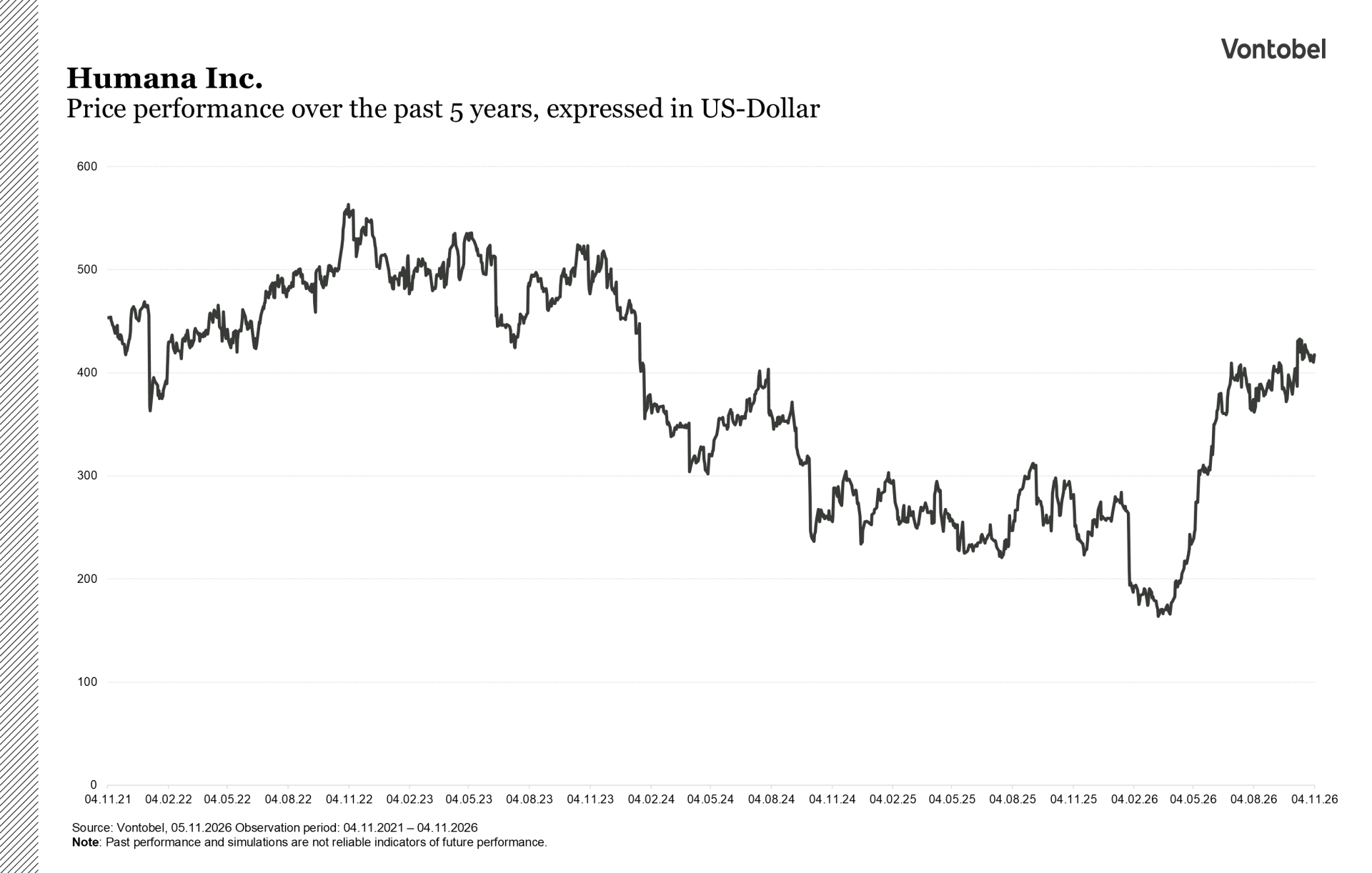
The importance of this business segment is also reflected in Humana’s financial results. In the Individual Medicare Advantage segment, membership has increased by approximately 1.2 million, or 23 percent, since the beginning of the year. For the full year, the company expects growth of about 25 percent (Humana Inc. Second Quarter 2026 Prepared Management Remarks, 29.07.2026). At the same time, revenue in the second quarter increased from $32.4 billion to $40.9 billion. For the first half of the year, revenue rose from $64.5 billion to $80.5 billion (Humana Q2 2026 Earnings Release, 29.07.2026). Nevertheless, the regulatory environment and trends in healthcare costs remain key influencing factors.
Health Care in the Face of Demographic Change
While demographic change poses numerous challenges for societies and health care systems, it could also become one of the most important long-term growth drivers in the health care sector. As life expectancy rises, diagnostics, medical technology, and health care services are likely to continue to gain in importance.
Companies such as Siemens Healthineers and Humana could benefit from this long-term trend, but they also face operational and regulatory challenges. Demographic change alone does not guarantee rising stock prices. However, it creates a structural environment in which healthcare and medical technology could gain importance over the long term.