China's Export Machine on Track for a Record: Opportunities in the Automotive Sector


China is on track to set a new record for its trade surplus, underscoring the competitiveness of its industrial sector. While semiconductors and AI technologies remain key growth drivers, the automotive industry, in particular, is increasingly coming into focus. In particular, the strong growth in exports of hybrid and electric vehicles is opening up interesting opportunities for investors.
Record Exports Drive China's Economy
China is cementing its role as the world's leading exporting nation. In September 2026, exports rose by 36,3 percent compared with the previous year, while imports increased by 31 percent. The trade surplus reached $133.5 billion in September alone and had already totaled $938 billion in the first nine months of the year. As a result, China is likely to soon surpass the $1 trillion mark in trade surplus and set a new record. This trend shows that, despite geopolitical tensions and escalating trade conflicts, Chinese companies continue to enjoy significant competitive advantages in international markets. In addition to high demand for technologies related to artificial intelligence, semiconductors, and storage solutions, the People’s Republic is benefiting in particular from its strong industrial base and access to new markets. At the same time, persistently weak domestic demand is forcing many companies to increasingly seek growth abroad, which further boosts export momentum (Tagesschau, 14.10.2026; Handelsblatt, 14.10.2026).
The automotive industry is becoming a driver of growth
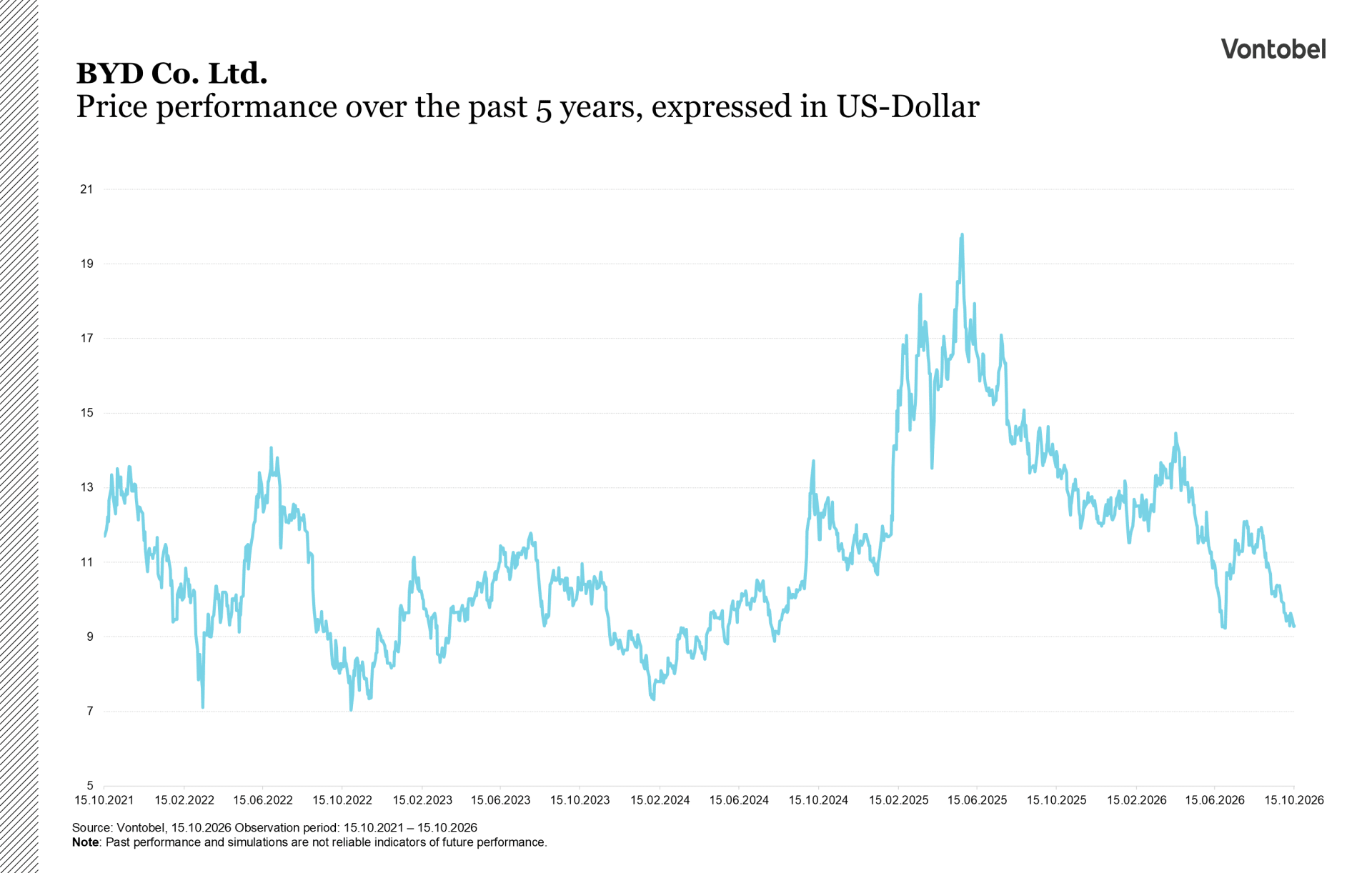
The Chinese automotive industry is experiencing particularly strong growth. In 2026, auto exports rose by more than 50 percent in both value and volume, making them one of the key drivers of growth in China’s foreign trade. Chinese manufacturers have established a strong competitive position in recent years, particularly in the electric and hybrid vehicle sectors. Companies such as BYD benefit from modern battery technologies, high production capacities, and an efficient supply chain. This success is particularly evident in Europe. After the European Union imposed additional tariffs on Chinese electric vehicles, many manufacturers shifted their focus to plug-in hybrids, which were not initially affected by these measures. The strategy proved successful: Chinese hybrid exports to the EU rose to $7.5 billion in the first half of 2026, tripling compared to the previous year. Chinese brands have now achieved a market share of around 15 percent for electric vehicles in Europe, while they already account for more than a quarter of the market for plug-in hybrids. These figures illustrate that Chinese manufacturers have long since moved beyond competing solely on price and are increasingly making a strong technological impression (Reuters, 12.10.2026; Tagesschau, 14.10.2026).
Trade Conflicts as the Greatest Risk
However, the rapid success of Chinese automakers is not without political consequences. Both the U.S. and the European Union are closely monitoring the rising market shares of Chinese manufacturers. In Europe in particular, there is growing concern that subsidized Chinese vehicles could put pressure on domestic producers. Against this backdrop, Brussels and Beijing recently agreed to limit imports of Chinese hybrid cars. The plan calls for an initial annual cap of 350 000 vehicles, which is expected to rise only moderately in the coming years. Nevertheless, many market participants view the agreement more as a sign of détente than as an escalation. Analysts see it primarily as a way to reduce the risk of further punitive tariffs. At the same time, the agreement could accelerate the development of local production capacity in Europe. Several Chinese automakers are already exploring vehicle manufacturing plants within Europe to circumvent import restrictions and produce closer to their customers. In the long term, this could even further strengthen the companie’s market position (Reuters, 12.10.2026; Tagesschau, 14.10.2026; Handelsblatt, 14.10.2026).
Long-Term Opportunities Despite Political Obstacles
For investors, the Chinese automotive sector offers attractive prospects. The combination of strong export growth, technological competitiveness, and rising market shares suggests that the international expansion of Chinese manufacturers is not yet complete. Companies such as BYD are benefiting from long-term trends such as electrification, hybridization, and the global expansion of sustainable mobility. While trade restrictions, quota regulations, and geopolitical tensions remain significant risk factors, current export figures show that Chinese manufacturers are increasingly emerging as global competitors and are steadily expanding their presence in key markets. For long-term investors, the Chinese automotive sector could therefore represent an attractive opportunity to participate in the transformation of the global automotive industry (Reuters, 12.10.2026; Tagesschau, 14.10.2026; Handelsblatt, 14.10.2026).