AI Needs Security: Why AI and Cybersecurity Are Among the Most Important Technology Trends


Digitalization is rapidly transforming the economy and society. Companies are investing in new technologies, automating processes, and increasingly using data as a strategic competitive advantage. Two topics in particular are currently at the center of this development: artificial intelligence (AI) and cybersecurity. While AI opens up new opportunities for efficiency gains and innovation, cybersecurity ensures that digital processes, data, and systems remain protected. Both areas benefit from long-term growth trends and are closely interlinked.
Artificial intelligence is emerging as a key technology
In just a few years, artificial intelligence has evolved from a vision of the future into a core technology for businesses. Applications range from intelligent assistants and automated data analysis to software solutions that can independently recognize patterns and support decision-making. Today, companies use AI to optimize supply chains, automate customer service and analyze large volumes of data, among other things.
Its economic significance could continue to grow significantly. According to UNCTAD’s Technology and Innovation Report 2025, the global market for artificial intelligence is projected to grow to approximately 4.8 trillion U.S. dollars by 2033. At the same time, market researchers anticipate sustained high growth rates as companies worldwide invest in data centers, cloud infrastructure, semiconductors, and AI software (UNCTAD, Technology and Innovation Report 2025; Statista Market Insights (2025): Artificial Intelligence - Worldwide Market Insights).
Digitalization creates new risks
However, as the use of digital technologies increases, so does the attack surface for cybercrime. Today, companies store large amounts of sensitive data, increasingly rely on cloud-based applications, and connect production facilities and IT systems across national borders. As a result, issues such as data security, identity management, and network protection are becoming significantly more important.
Cyberattacks can cause significant financial damage. According to the IBM Cost of a Data Breach Report 2025, the average cost of a data breach worldwide is now approximately $5 million. In addition to direct financial losses, companies may also face reputational damage, business disruptions, or regulatory consequences (IBM, Cost of a Data Breach Report 2025, March 1.03.2026).
Cybersecurity Is Becoming a Growth Market
Against this backdrop, companies, government agencies, and organizations are increasingly investing in security solutions. These include, for example, modern firewalls, cloud security, encryption technologies, identity management, and systems for detecting and defending against cyberattacks.
Market observers expect spending on cybersecurity to continue to rise in the coming years. According to data from Statista, the global market size of the cybersecurity industry is already well over 200 billion U.S. dollars. Additional growth drivers include stricter regulatory requirements, the increasing digitization of business processes, and the expansion of cloud-based applications.
Unlike many other technology investments, cybersecurity is now viewed by numerous companies as a fundamental necessity. Protecting digital infrastructure is now one of the key prerequisites for uninterrupted business operations (Statista Market Insights, Cybersecurity Market 2025; World Economic Forum, Global Cybersecurity Outlook 2025, 10.01.2025).
Why These Two Trends Are Closely Linked
Artificial intelligence and cybersecurity are increasingly evolving hand in hand. On the one hand, AI helps modern security solutions detect suspicious activity more quickly, analyze large volumes of data, and automatically identify potential threats. On the other hand, cybercriminals are also increasingly using advanced technologies to make their attacks more efficient.
For companies, this means that the adoption of AI often requires additional investment in security solutions. The more business processes are digitized and automated, the higher the demands on the protection of data and IT systems become. Many experts therefore view both areas as central building blocks of the digital economy (World Economic Forum, Global Cybersecurity Outlook 2025, Jan. 10, 2025; UNCTAD, Technology and Innovation Report 2025).
Opportunities for Investors
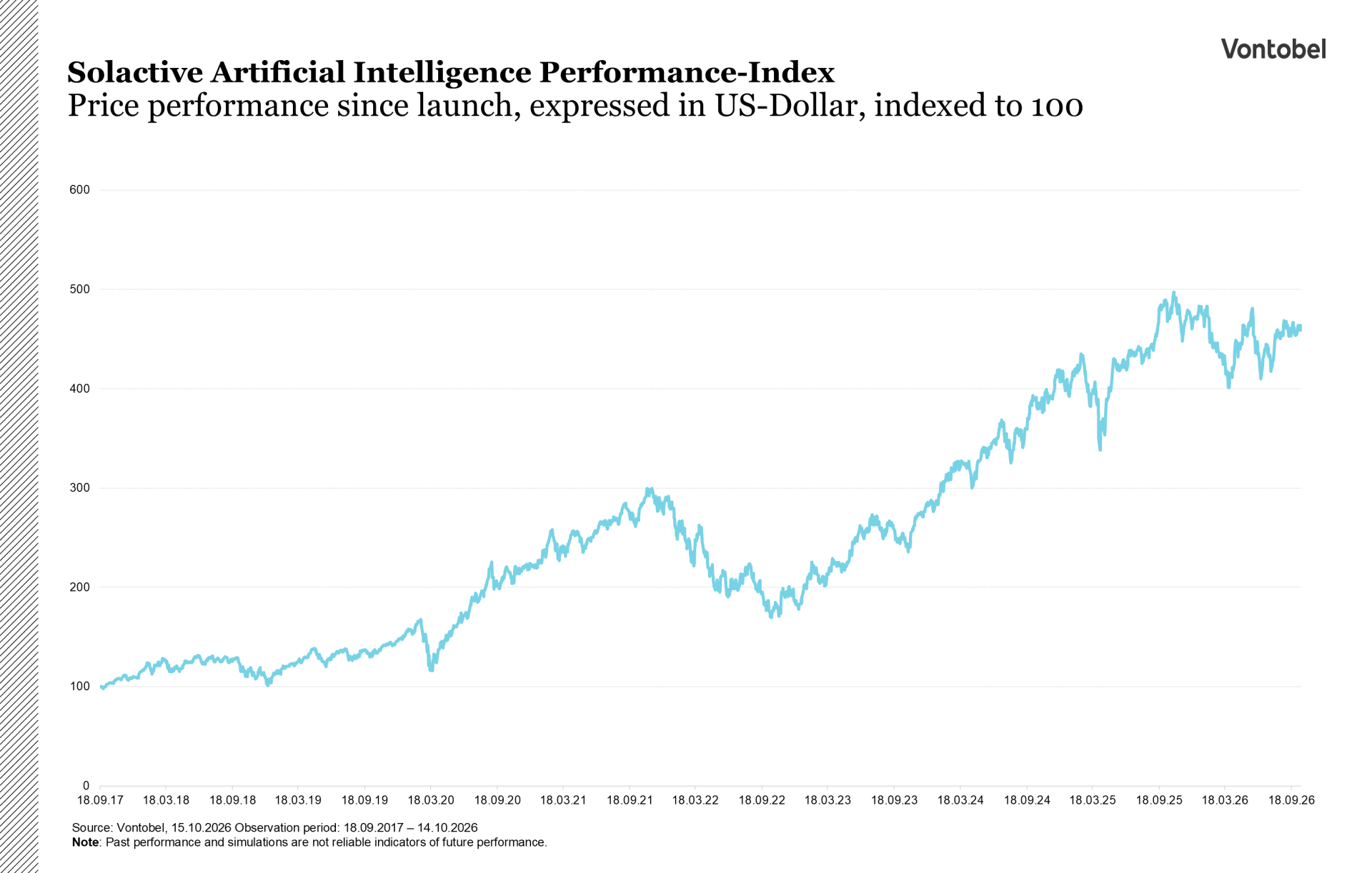
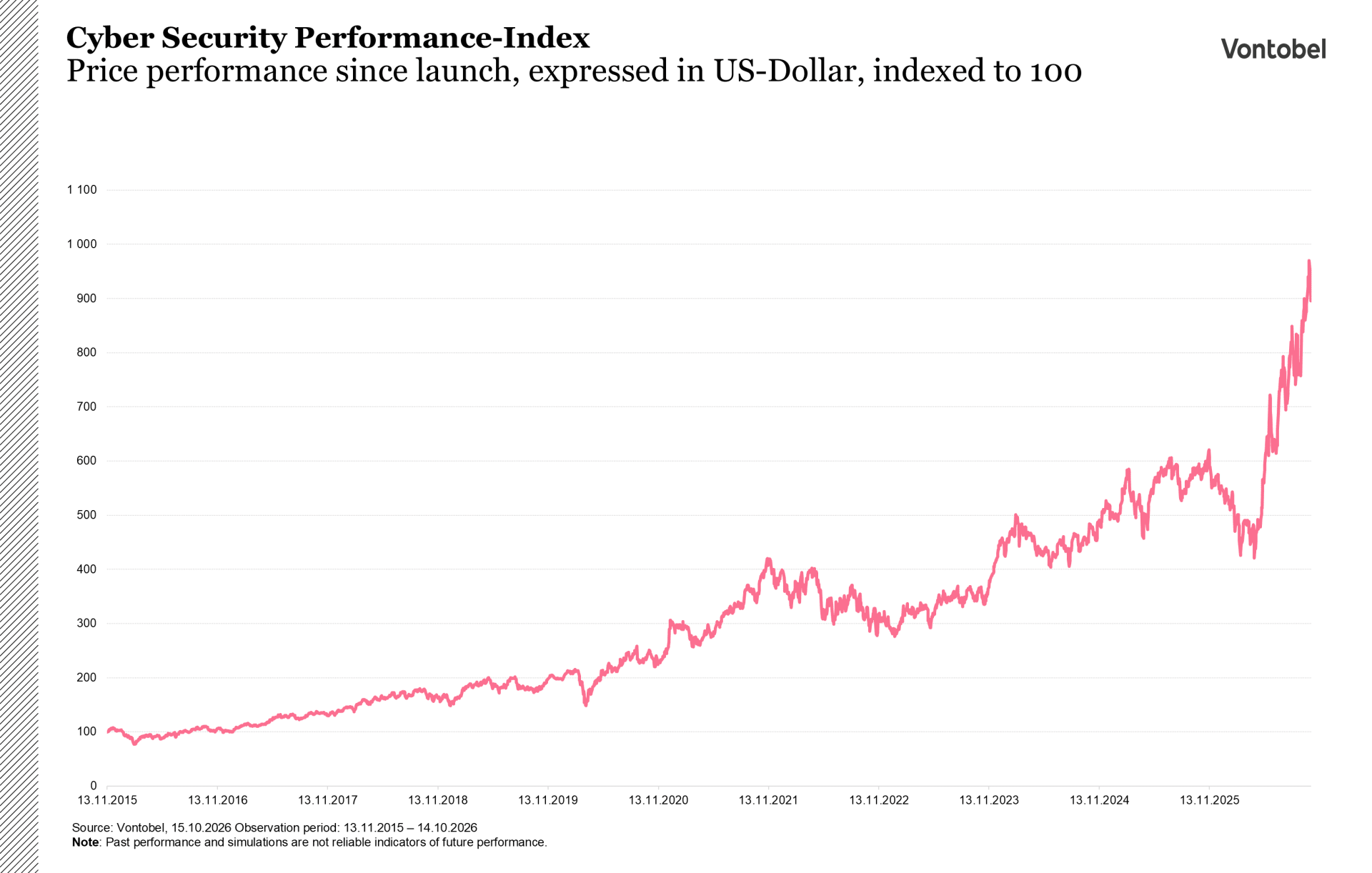
Investors who wish to specifically capitalize on the future-oriented themes of artificial intelligence and cybersecurity can do so through thematic indices. The Solactive Artificial Intelligence Performance Index tracks companies operating along the AI value chain. These include, for example, providers of semiconductors, software, cloud infrastructure, and other technologies that stand to benefit from the growing adoption of artificial intelligence. The Cyber Security Performance Index, on the other hand, focuses on companies that develop security solutions for networks, end devices, cloud applications, and digital identities. Given rising cyber risks and increasing regulatory requirements, this market is becoming increasingly important for companies worldwide. Both indices thus provide targeted exposure to two key technology trends driving digital transformation.
The Future of the Digital Economy
Artificial intelligence and cybersecurity are increasingly becoming indispensable building blocks of the modern economy. While AI creates new opportunities for efficiency gains, innovation, and data-driven decision-making, cybersecurity ensures that digital infrastructures and sensitive information remain protected. As digitalization continues to advance, the importance of both fields is likely to grow even further in the future.