Spotlight on Coffee: From the Plantation to the Stock Market


For many people, the day begins with a cup of coffee. This hot beverage is one of the world’s most popular consumer goods, with billions of cups consumed every day. What is less well known, however, is that coffee is also one of the world’s most important agricultural commodities. Similar to oil, gold, or cocoa, coffee is traded on international commodity markets and is subject to sometimes significant price fluctuations. For investors, this can open up interesting opportunities. At the same time, the coffee market is influenced by numerous factors that can directly affect price trends.
What Drives Coffee Prices
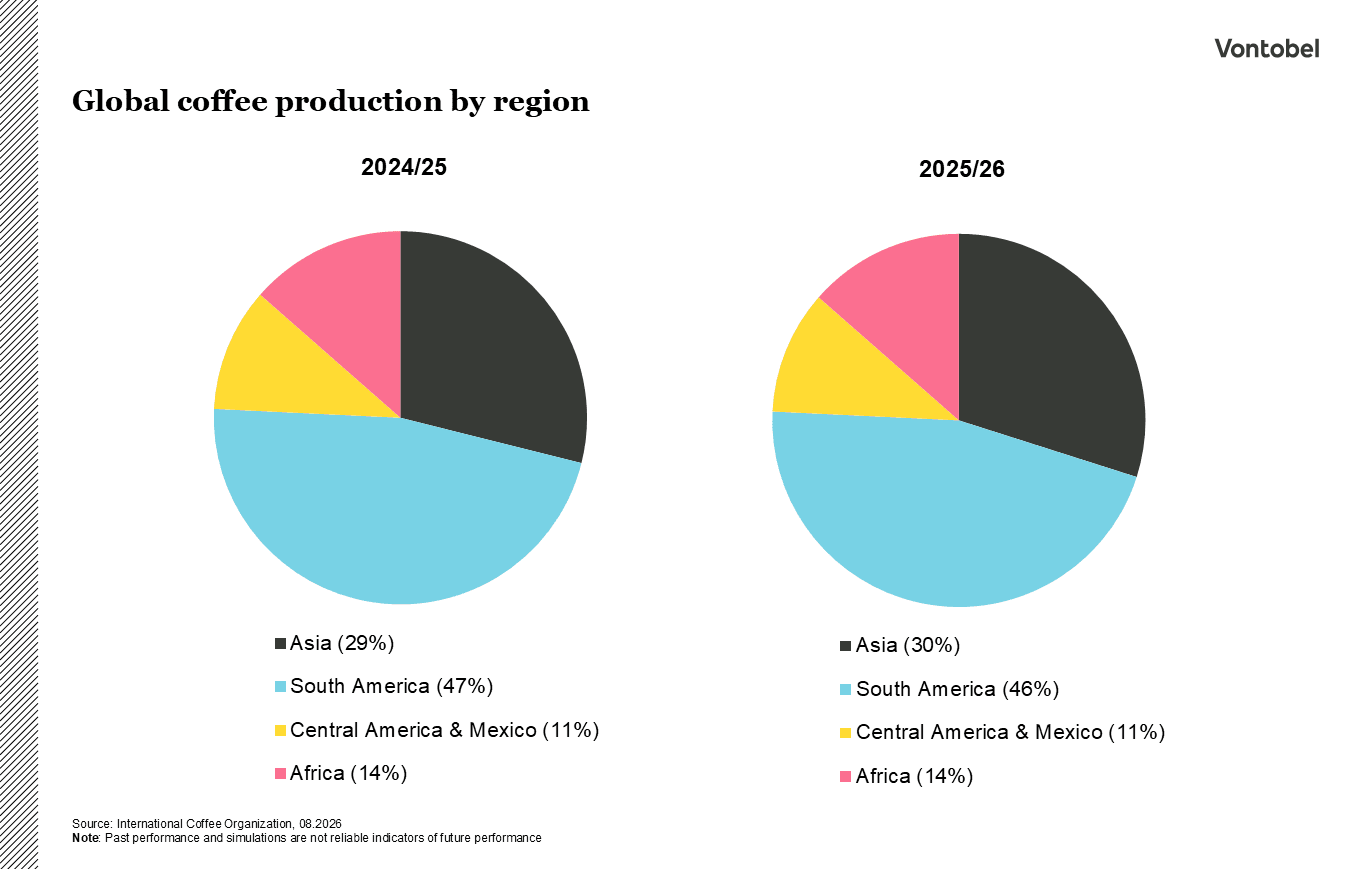
Coffee prices are largely determined by supply and demand. Major coffee-producing countries play a particularly important role in this regard. Brazil is considered the world’s largest coffee producer, while Vietnam plays a key role, particularly in the production of Robusta coffee (Coffee: World Markets and Trade, 07.2026).
Weather events can have a significant impact on the market. Droughts, frost, heavy rain, or other extreme weather conditions have the potential to damage crops and reduce supply on the global market. Even the mere concern over crop failures can be enough to cause coffee prices to rise significantly (Coffee Market Report, 08.2026).
On the demand side, the market appears comparatively robust. Coffee is part of everyday life in many countries and continues to enjoy great popularity. Furthermore, demand for high-quality specialty coffees is growing in numerous regions. This trend can provide additional support to the market and contribute to a stable demand environment in the long term (Coffee Market Report, 08.2026).

Coffee as an Investment
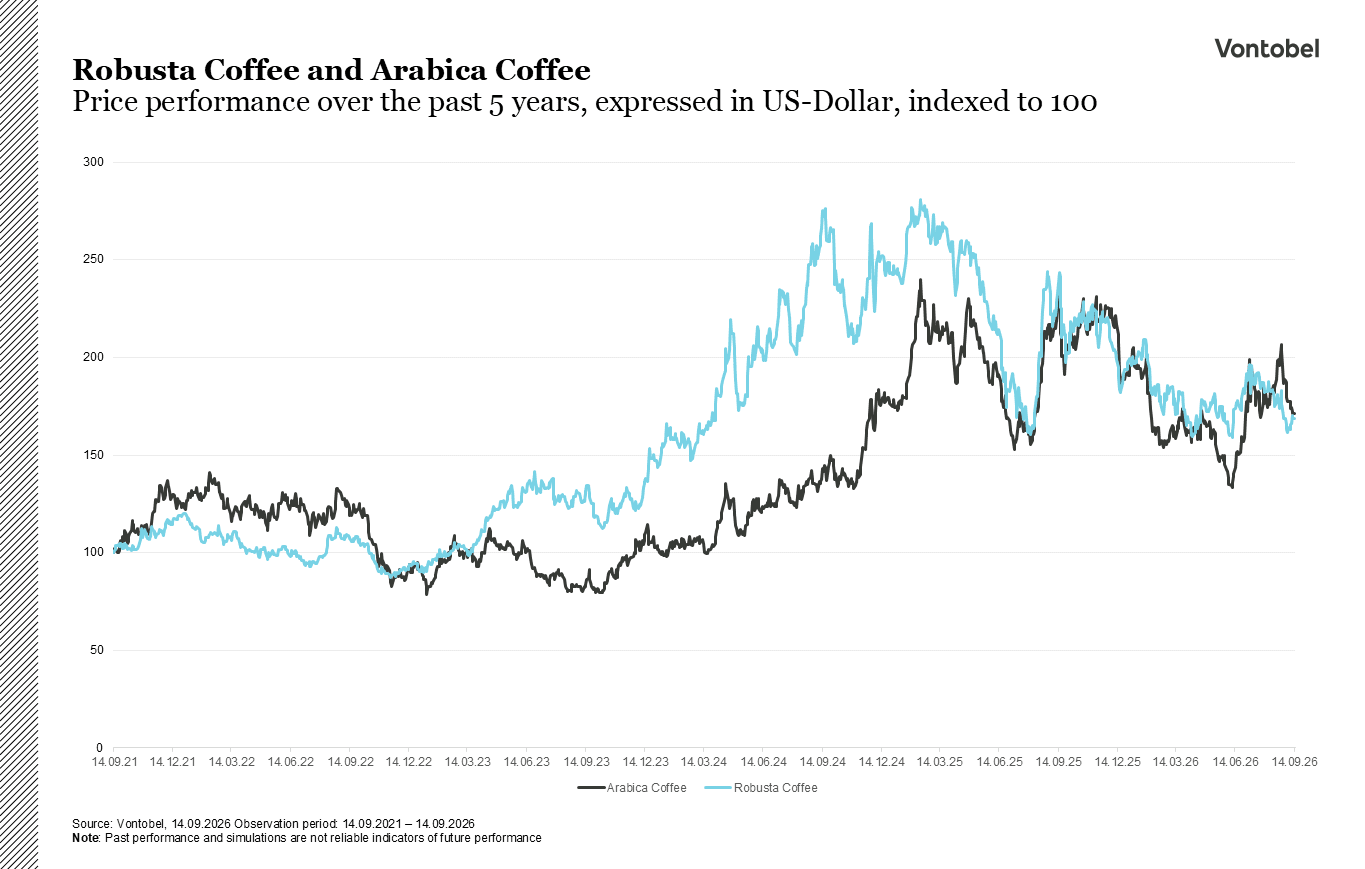
Investors have the opportunity to participate in the performance of coffee prices through various financial instruments. This involves betting directly on the price movement of the commodity rather than investing in individual companies. The performance of the coffee market is often represented by continuous futures contracts, while investment products typically reference a specific futures contract with a set expiration date. As a result, a product’s performance may occasionally deviate from the trend shown on a general market chart.
Commodity investments are characterized by price movements that can sometimes be sharp. If supply shortages occur or global inventories decline, prices can rise significantly within a short period of time. Investors thus participate directly in the price movements of the commodity market, which can be either positive or negative.
At the same time, a commodity investment differs significantly from an equity investment. While shareholders can benefit from corporate profits or dividends, the success of a coffee investment depends exclusively on the price movements of the commodity.
Supply Chains, Currencies, and Politics
The long-term outlook for the coffee market is influenced by various factors. In addition to global demand, developments along the supply chain also play an important role. Changes in transportation costs, logistics, or export capacity can affect pricing just as much as fluctuations in inventory levels in major growing regions (Coffee Market Report, 08.2026).
Furthermore, coffee prices are often traded in U.S. dollars. Changes in the foreign exchange markets can therefore affect both the competitiveness of producers and the demand from various importing countries. Political decisions, trade restrictions, or regulatory requirements can also have temporary effects on market conditions (Coffee Market Report, 08.2026).
For investors, this results in a wide range of influencing factors that go beyond the mere dynamics of supply and demand. Anyone investing in coffee should therefore take into account the unique characteristics of the commodity market as well as its increased susceptibility to volatility.
Mini Futures on Coffee Futures
Constant Leverage Certificates on Coffee Futures
The coffee market remains in the spotlight for investors
For investors, coffee thus offers the opportunity to participate in the performance of a globally traded agricultural commodity. At the same time, investing in coffee requires an understanding of the specific factors that influence the market, which can range from weather conditions to inventory levels and currency effects.