Mulled wine, gifts, and the question of consumer sentiment


A cup of mulled wine costs significantly more at many European Christmas markets today than it did just a few years ago. Nevertheless, the spaces between market stalls, string lights, and wooden huts are filling up with visitors again this winter. This highlights a fascinating contradiction in the current economic situation: Many consumers are watching their budgets, but they aren’t completely foregoing experiences and small purchases. Christmas markets therefore offer an insightful look at just how resilient consumer sentiment actually is as the year comes to a close.
Christmas Markets: Between Tradition and Rising Costs
In many European cities, Christmas markets are among the most important seasonal attractions. At the same time, organizers and vendors face the same challenges as many other businesses. Energy, labor, logistics, rent, and security measures have become more expensive in recent years. The Advent season therefore offers insightful perspective on how successfully businesses can pass rising costs on to their customers.
This is particularly evident with mulled wine. In Germany, a cup will cost an average of about 4.60 euros in 2026, compared to 3.94 euros in 2023 (Chip, 2026). Depending on the region and market, prices range from about 3.50 to 7.50 euros. These differences reflect not only local cost structures but also visitors’ varying willingness to pay.
It is noteworthy that while prices have risen in many places, demand has so far shown little sign of slowing. For many consumers, the Christmas market has long been more than just a place to shop. It combines dining, leisure, and social experiences. As a result, price increases can sometimes be implemented more easily than in other areas of daily consumption. At the same time, it’s clear that consumers continue to spend money on select experiences. This holds true even when they’re keeping a closer eye on their overall budget.
Consumer sentiment remains subdued
The trend at Christmas markets is consistent with the broader picture of European consumer spending. Following several years of high inflation, many households continue to carefully weigh their spending decisions. At the same time, there are few signs so far of a noticeable decline in consumer demand.
The German Retail Association (HDE) expects retail sales of 129.2 billion euros for November and December. This would represent an increase of about 2 percent compared to the previous year (HDE, 3.11.2026). Adjusted for inflation, however, growth is likely to be significantly lower.
When it comes to the Christmas budget, caution prevails over euphoria. According to a survey commissioned by the HDE, consumers plan to spend an average of 262 euros on gifts. This is virtually the same as last year’s level. At the same time, about one in four respondents intends to reduce their spending compared to last year (HDE, 3.11.2026).
This paints a picture of consumers who are not cutting back on spending across the board but continue to scrutinize larger purchases. For many companies, this means that sales growth is no longer as certain as it was a few years ago. At the same time, it is evident that certain market segments are developing quite differently from the retail sector as a whole.
Luxury and online fashion retail exhibit different consumption patterns
The caution shown by many households is not equally evident across all market segments. While many consumers are planning their spending more carefully than they did a few years ago, demand in the luxury goods sector is proving to be more resilient in some cases. Affluent customer groups are often less sensitive to short-term economic fluctuations, which can provide additional stability to companies with strong brands.
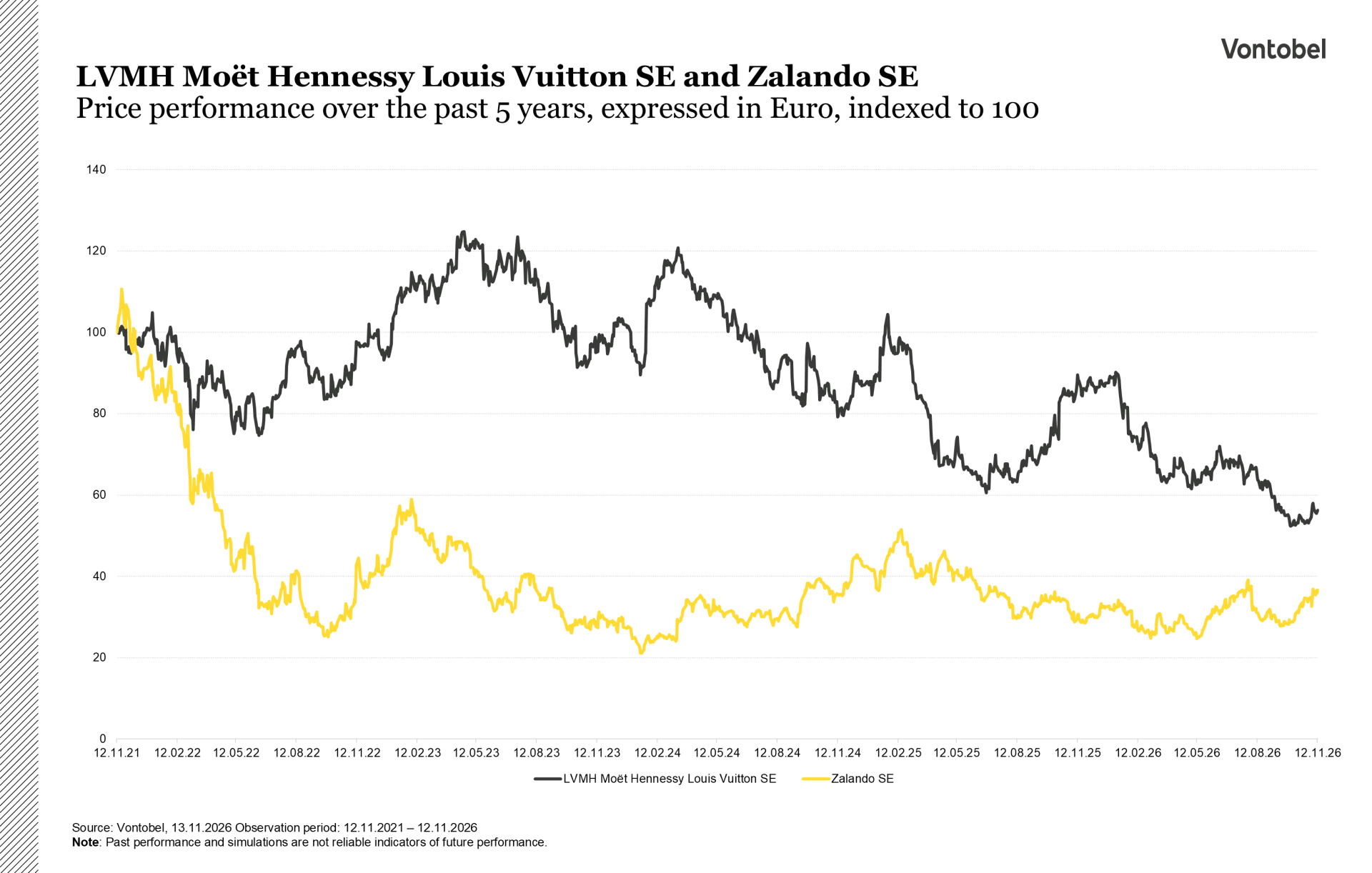
The luxury goods group LVMH achieved organic revenue growth of 1 percent to 18.5 billion euros in the third quarter of 2026. The result was primarily weighed down by continued weak demand in China, while markets in Europe, the U.S., and Japan performed comparatively robustly (Reuters, 12.10.2026). The figures illustrate that demand within the luxury segment varies significantly from region to region.
Differences are also increasing among individual brands. In an interview with Monochrome Watches, Jean Philippe Bertschy, Head of Vontobel Equity Research, described the current environment as a phase of “selective normalization.” This does not refer to a broad-based recovery across the entire sector. Rather, market leaders with strong brand power, high customer loyalty, and significant pricing power are benefiting the most, while other providers continue to face weaker demand and lower visibility (Monochrome Watches, 18.02.2026).
The online fashion retail sector paints a different picture. According to Reuters, Zalando’s revenue rose by 5,1 percent to 3.17 billion euros in the third quarter, slightly exceeding analysts’ expectations. At the same time, the company noted that the consumer environment remains challenging. Unlike in the luxury segment, price promotions and discounts remain important tools for sustaining demand in the fashion retail sector.
This trend is particularly revealing for the holiday shopping season. While many retailers are struggling to generate additional sales momentum, established premium brands can often count on a comparatively stable customer base. The differences in consumer behavior are thus greater than aggregate retail figures might suggest at first glance.
Multi-Barrier Reverse Convertible
Constant Leverage Certificates on LVMH Moët Hennessy Louis Vuitton SE
Constant Leverage Certificates on Zalando SE
Experiential retail and e-commerce are growing side by side
The Advent season shows that consumer behavior is not moving in just one direction. While Christmas markets and shopping streets continue to benefit from their atmosphere and the experiential nature of the shopping experience, digital retail continues to gain importance. For many consumers, these two worlds are no longer mutually exclusive. They find inspiration in-store, compare prices online, and shop wherever the selection, price, and convenience best align.
This trend is also reflected in retailers’ expectations. The German Retail Association (HDE) forecasts a 4,1 percent increase in online sales to 23.1 billion euros for the 2026 holiday season (HDE, 3.11.2026). This means that online retail is likely to grow faster than the overall market once again. At the same time, visitor numbers at many Christmas markets show that in-person shopping experiences remain in demand despite increasing digitalization.
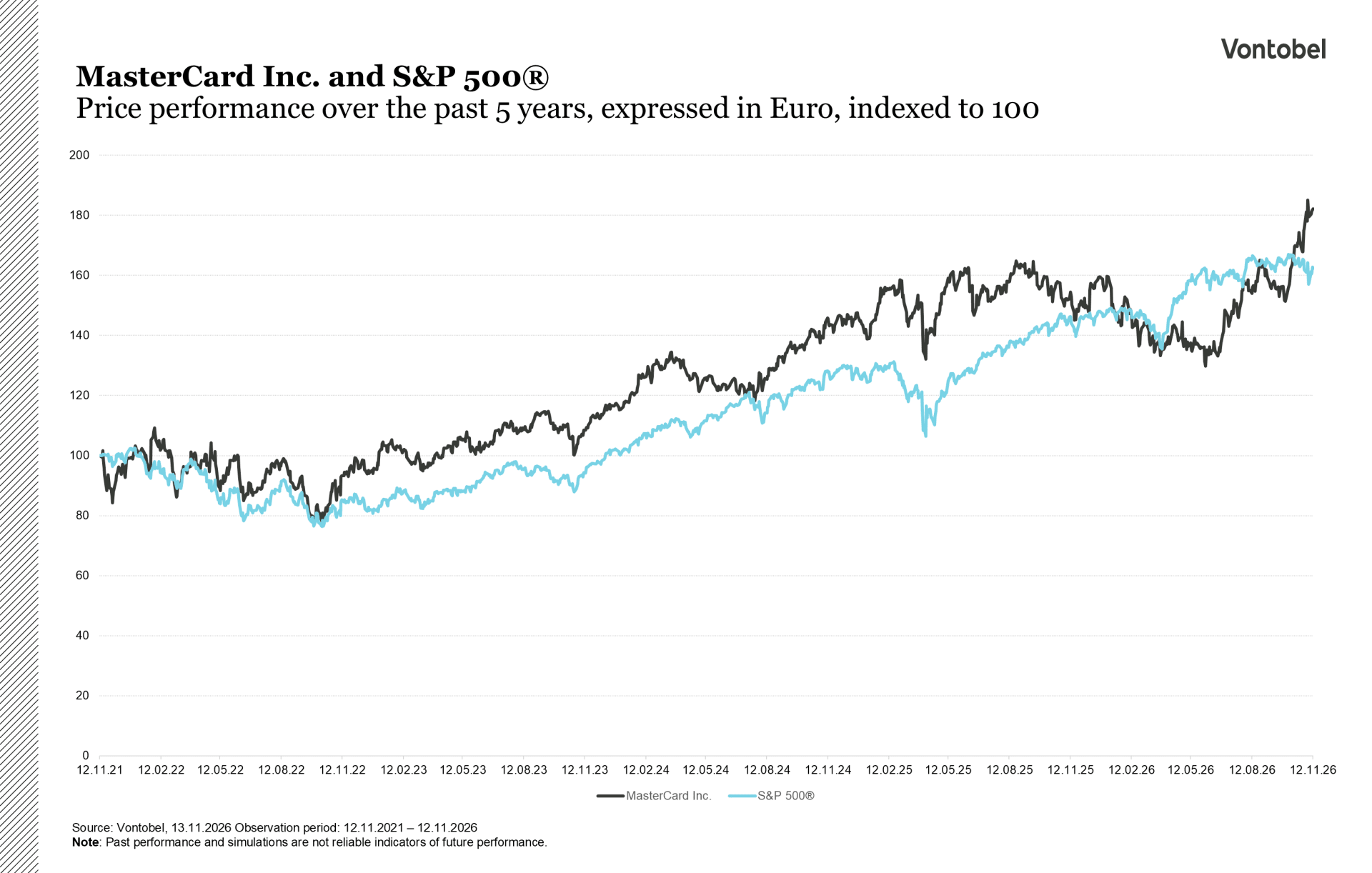
Payment data from the U.S. shows a similar trend. The Mastercard Economics Institute expects retail sales to grow by 5,5 percent during the holiday season. Online retail is expected to grow particularly rapidly, while brick-and-mortar retail could see more moderate growth (Mastercard Economics Institute, 23.09.2026). It is worth noting, however, that part of this growth is likely attributable to higher prices. Rising payment volumes do not automatically mean that the quantities sold are increasing at the same rate.
For European observers, the U.S. data is only partially applicable. However, it underscores a trend that can also be observed in Europe: Consumers remain willing to spend but are weighing their purchasing decisions more carefully. There is a demand for retailers who can convincingly combine price, convenience, and the shopping experience.
Constant Leverage Certificates on MasterCard Inc.
Constant Leverage Certificates on the S&P 500® Index
A Closer Look at the Economy on a Small Scale
Christmas markets are more than just a seasonal recreational activity. They show how businesses can pass on rising costs and how consumers react to higher prices.
The signals so far point to stable but cautious consumer sentiment. Many households remain willing to spend money on special experiences and select gifts, but are paying closer attention to their spending. At the same time, not all sectors are benefiting equally: While the broader retail sector is suffering from subdued demand, some luxury brands can continue to implement price increases thanks to their strong market position.
The weeks leading up to Christmas will reveal whether this trend continues. However, it is already clear what many companies are concerned about: Demand remains strong, but it is significantly more selective than it was before the rise in inflation.