Expansion of AI Data Centers: First Signs of a Slowdown in the Boom, or Healthy Consolidation?


Hardly any other sector of the technology industry is currently growing faster than artificial intelligence infrastructure. Data centers, networking technology, and energy supply form the foundation for increasingly powerful AI models. According to estimates by Goldman Sachs, the major hyperscalers could invest approximately $1.4 trillion in capital as early as 2027 (Goldman Sachs, 18.09.2026). However, while demand for computing power remains high and investments continue to rise, investors are increasingly focusing on the profitability of these projects. Recent developments surrounding Oracle and the Elice Group’s initial public offering (IPO) suggest that, in addition to growth, the focus is now shifting more toward financing, return on investment, and the long-term sustainability of these investments.
The market is questioning the cost-effectiveness of AI investments
In recent weeks, there has been a growing number of reports suggesting that investors are increasingly questioning the economic viability of AI infrastructure projects.
In addition to the financing of large infrastructure projects, attention has recently turned to how investors evaluate individual business models in the AI data center sector. One example is the South Korean company Elice Group, which specializes in modular and portable data centers. The initial public offering (IPO) initially performed significantly worse than expected. According to Reuters, the stock lost about 32 percent on its first day of trading, marking the weakest first day of trading for an IPO in the history of the South Korean stock market (Reuters, 20.10.2026). While individual IPOs can hardly serve as an indicator of the health of an entire industry, and the stock price recovered quickly after trading began (CNBC, 21.10.2026). Nevertheless, this case shows that investors are now distinguishing more clearly between individual business models and do not automatically assign high valuations to every company related to AI or data centers.
None of these examples necessarily undermines the sector’s long-term growth prospects. However, they underscore that the expansion of AI infrastructure involves significant investments, financing risks, and operational challenges. It is precisely in such an environment that it may be of interest to investors to consider companies across various stages of the value chain.
Oracle: Benefiting from Rising Demand for Data Centers
Oracle recently made headlines. According to media reports, the company invoked a force majeure clause in connection with the so-called Jupiter Project to defer payments (Reuters, 24.09.2026). While this development should not be interpreted as the company pulling out of the project, it does highlight the complexity of large-scale data center projects. Building modern AI infrastructure requires not only enormous investments but also precise coordination of financing, energy supply, hardware supply chains, and construction progress.
In recent years, Oracle has increasingly positioned itself as a cloud and infrastructure provider. While the company was long known primarily for its databases, cloud services and data center capacity now play an increasingly important role.
This momentum is also reflected in the latest financial results. In the first quarter of fiscal year 2027, Cloud Infrastructure revenue rose by 121 percent to $7.4 billion (Oracle Q1 FY27 Earnings Presentation, September 2026). This makes Oracle one of the companies that could benefit directly from the rising demand for AI computing power. At the same time, the company has a large existing customer base as well as long-standing relationships with businesses and government agencies. Should demand for AI services continue to grow rapidly, the company’s cloud business could gain even greater significance.
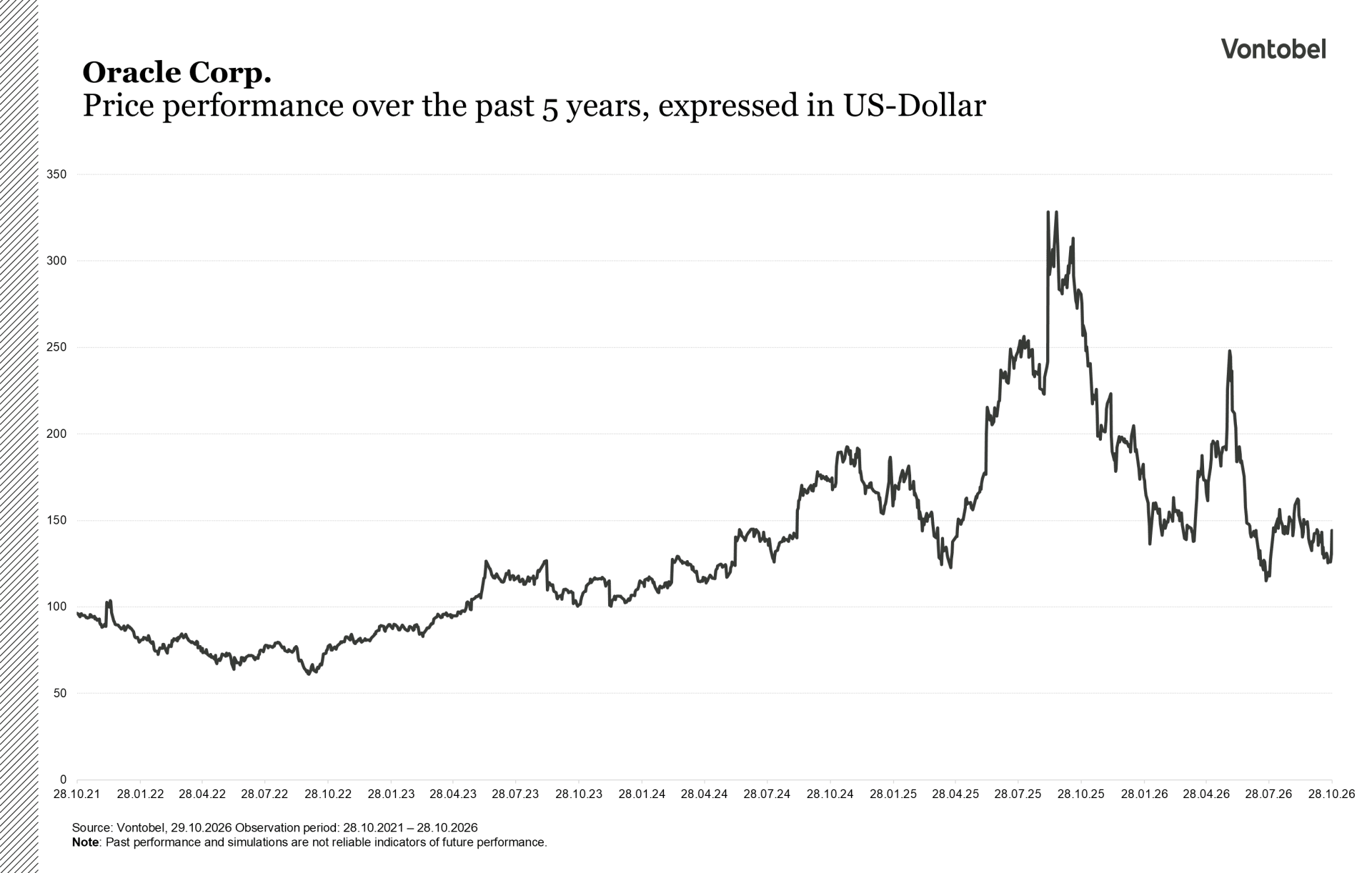
Constant Leverage Certificates on Oracle Corp.
Mini Futures on Oracle Corp.
Callable Barrier Reverse Convertible on Oracle Corp.
Vertiv: The Shovels of the Gold Rush
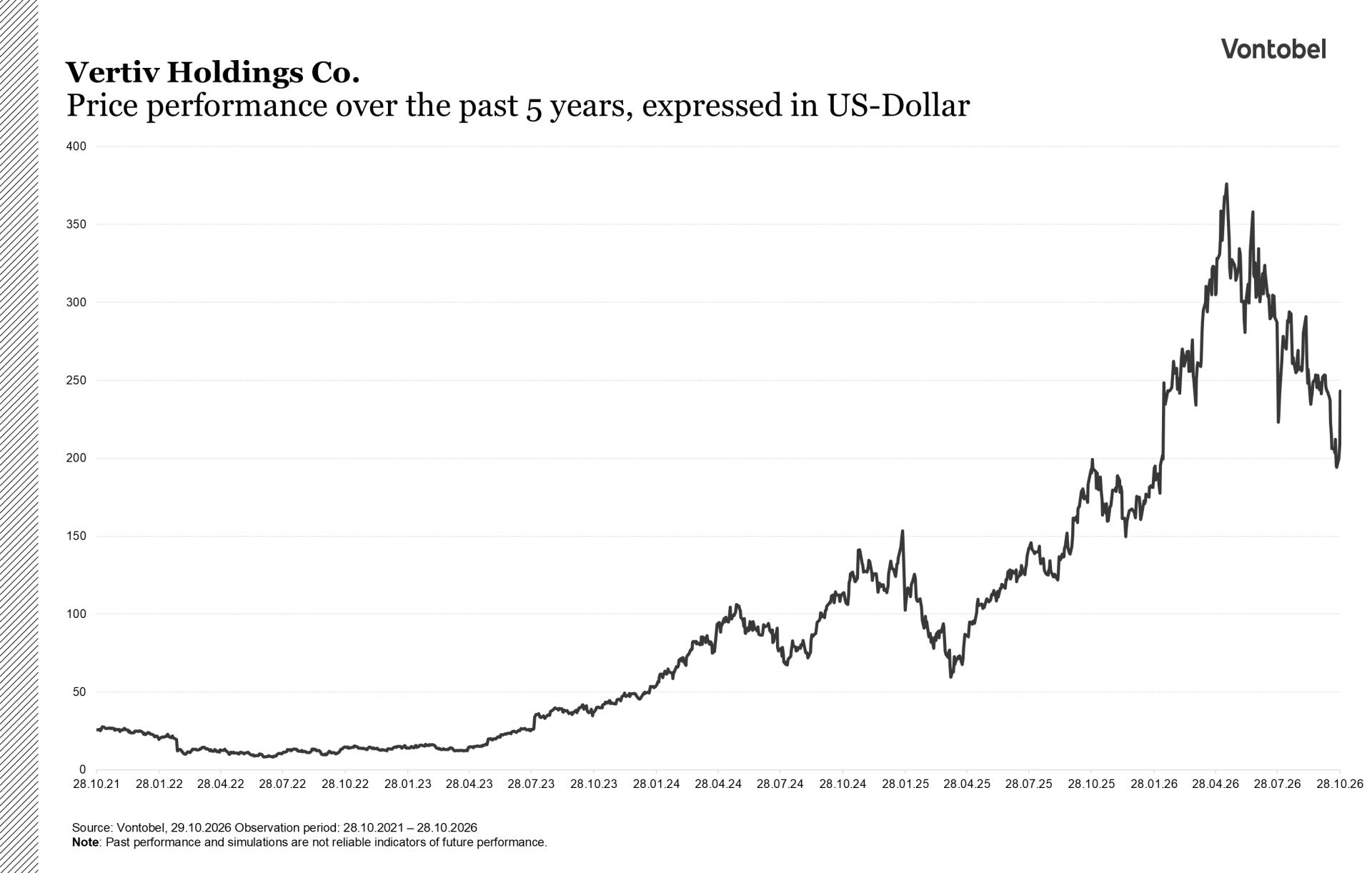
While many investors are focusing on AI models, semiconductors, or cloud platforms, Vertiv plays a different role within the ecosystem. The company provides power, cooling, and infrastructure technology for data centers.
This sector, in particular, is becoming increasingly important. Modern AI chips require significantly more energy than earlier generations of chips and, at the same time, generate considerably more heat. As a result, the demands on power supply, cooling, and energy efficiency are continuously rising.
This trend is also reflected in the company’s financial results. In the second quarter of 2026, Vertiv increased its revenue by 24 percent to $3.27 billion and raised its full-year forecast at the same time (Vertiv Second Quarter 2026 Results Presentation, July 2026). The figures indicate that demand for data center infrastructure remains high.
Vertiv does not benefit from which AI model ultimately prevails or which cloud provider gains market share. Rather, the company earns revenue from the expansion of the underlying infrastructure. Regardless of whether the winners of the AI revolution are Nvidia, Microsoft, Oracle, or other technology companies, new data centers will require high-performance cooling and power supply systems.
Growth alone is no longer enough
The expansion of global AI infrastructure remains a significant long-term growth trend. However, recent developments involving Oracle and Elice show that this boom is not without its challenges. High investment costs, complex project structures, and increasing financing requirements could temporarily slow down or drive up the cost of this expansion.
For investors, Oracle and Vertiv may nevertheless remain interesting companies through which to track the development of AI infrastructure. While Oracle benefits from the growing demand for cloud and data center capacity, Vertiv provides the technical infrastructure for modern data centers. Both companies thus occupy different positions along the AI value chain.