Oktoberfest: Hops, Chicken, and the Question of the Next Wave of Growth


When Oktoberfest kicks off again in Munich at the end of September, the focus is traditionally on beer tents, traditional costumes, and Bavarian hospitality. With millions of visitors from all over the world, Oktoberfest is one of the most famous folk festivals of all and, more than almost any other event, symbolizes the importance of beer as a cultural asset and economic factor. For investors, the Oktoberfest can therefore be an opportunity to take a closer look at developments in a sector that, despite its long tradition, continues to evolve.
The Beer Industry: Between Tradition and Change
The history of Oktoberfest dates back to 1810. Over the years, the wedding of the Bavarian Crown Prince Ludwig evolved into the world’s largest folk festival, which today symbolizes Bavarian tradition and beer culture.
The global beer industry is generally considered a mature market. In many industrialized countries, consumption is growing only slowly or, in some cases, is even declining. At the same time, consumer preferences are changing. Premium beers, non-alcoholic alternatives, and innovative beverage concepts are gaining increasing importance (Kirin Global Beer Consumption Report 2024, 22.12.2026).
For the major brewing conglomerates, this means that growth is often no longer achieved solely through increased sales volumes. Instead, the focus is on gaining market share, building strong brands, and tapping into new consumer groups. Companies that succeed in this can hold their own even in a challenging market environment.
Anheuser-Busch InBev as the global market leader
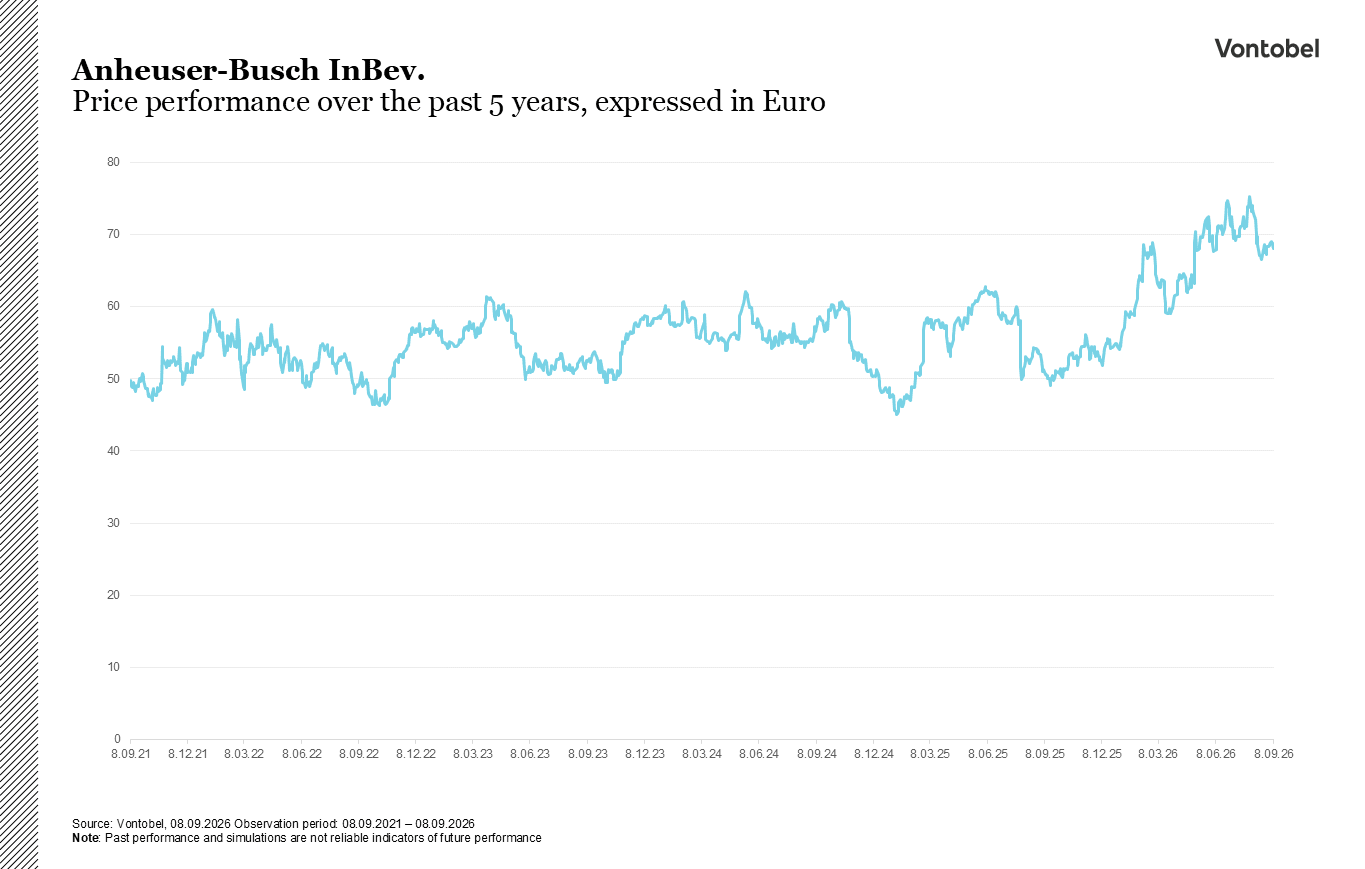
Anheuser-Busch InBev (AB InBev) is one of the best-known players in the industry. The company is the world’s largest brewery operator in terms of sales volume and brings together numerous well-known brands under one roof, including Corona, Budweiser, Stella Artois, and Beck’s (AB InBev Annual Report 2025, 12.02.2026).
The Corona brand, in particular, has established itself as the leading premium beer brand in many markets in recent years. Together with other international brands, it forms an important part of AB InBev’s portfolio. The company’s broad geographic footprint also enables it to benefit from diverse consumer trends in North America, Europe, Latin America, and Asia (AB InBev Annual Report 2025, 12.02.2026).
This could be of interest to investors, as strong brands often foster greater customer loyalty and can give companies pricing power. In times of rising costs, this can be an important competitive advantage.
Potential Growth Drivers for the Beer Industry
In many countries, beer is considered a staple consumer good, and demand for it often fluctuates less than in more cyclical industries. In addition, large brewing conglomerates benefit from their global presence. Companies such as AB InBev have extensive distribution networks, significant economies of scale, and high brand recognition. Furthermore, the trend toward premium products offers the opportunity to achieve higher margins, even if sales volumes grow only moderately (AB InBev Annual Report 2025, 12.02.2026).
Furthermore, numerous manufacturers are investing in non-alcoholic products and new beverage categories to respond to changing consumer preferences. If companies succeed in capitalizing on these trends, this could result in additional growth opportunities (AB InBev Annual Report 2025, 12.02.2026).
Between Cost Pressures and Changing Consumer Behavior
Despite these opportunities, the industry is not without risks. In many Western markets, beer consumption has been declining or stagnating for years. At the same time, health-conscious lifestyles are gaining importance, which could affect the consumption of alcoholic beverages in the long term (Brewers of Europe, European Beer Trends Report 2026, 9.07.2026).
Another risk factor is rising production costs. Raw materials such as barley and hops, as well as energy, transportation, and packaging costs, can put pressure on profit margins. In addition, companies operating internationally are exposed to regulatory risks, such as tax changes, advertising restrictions, or stricter regulations for alcoholic beverages.
Company-specific risks also play a role. At AB InBev, for example, investors have been monitoring the trend in debt levels, resulting from past acquisitions, for years. Although progress has been made in reducing debt in recent years, the capital structure remains an important point of focus for the market (AB InBev Annual Report 2025, 12.02.2026).
Oktoberfest as a symbol of the industry's importance
Every year, Oktoberfest impressively demonstrates the importance beer continues to hold in many societies. The beer industry benefits not only from the product itself, but also from its close ties to tradition, culture, and social events.
At the same time, the industry is undergoing a transformation. Changing consumer habits, new product categories, and an increasing focus on premium and non-alcoholic offerings are reshaping the market landscape and presenting companies with new challenges.