Expanded range of underlyings with "Foreign Exchange" (FX) and "Precious Metals" (PM) for investment products

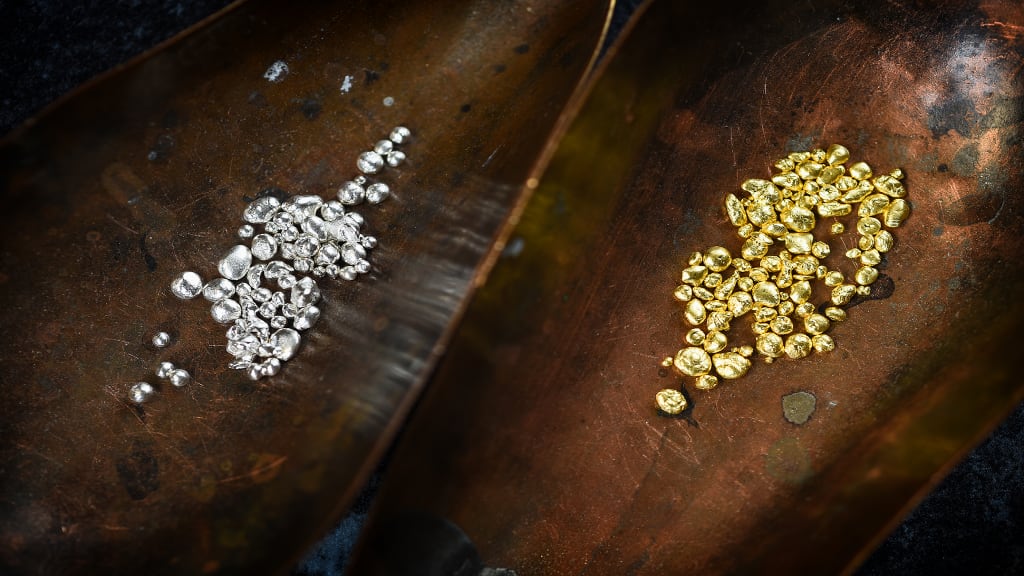
Vontobel is further expanding its range of underlyings for investment products. Precious metals such as gold, silver, platinum and palladium as well as selected currency pairs will now be available as underlyings. This includes the product range in the area of yield optimization and participation products.
Wide range of possibilities
The extended range of underlyings can enable investors to supplement their portfolios with investment products on alternative underlyings such as precious metals or currency pairs. In this way, the properties of the yield optimization and participation products can be linked in a targeted manner with the specific characteristics of the extended range of underlyings. For example, not only could sideways-trending prices of the underlying asset be converted into positive returns (in the form of a coupon), but risk considerations (such as a conditional risk buffer in the form of a barrier) can also be used. In addition, it will be possible to combine underlyings of different asset classes such as equities and precious metals into a single product (Multi). Available product features such as early redemption (Issuer Call and Autocall) or conditional coupons are also available as usual for the new underlyings.
More than just shine - precious metals as an underlying asset
Precious metals are among the most sought-after and valuable raw materials. Their availability, chemical resistance and versatility make them indispensable materials in numerous areas of application. They also play an important role on the financial markets as an investment instrument. Vontobel is expanding its existing range of underlyings to include the precious metals gold, silver, platinum and palladium. From now on, these will also be available for structured products popular in Switzerland, such as the Reverse Convertible.
Gold is the best-known and most sought-after precious metal and has been used for thousands of years as a store of value and for jewelry production, and in the past also as a means of payment. Thanks to its corrosion resistance and electrical conductivity, it is also used in electronics and in specialized areas of medical technology. Geopolitical tensions and economic uncertainty are having an impact on the demand for gold and have recently helped the price of gold to reach new heights. Gold is often perceived as a "safe haven" and is intended to protect against inflation. Gold is traded on the stock exchanges under the currency symbol "XAU".
Silver, on the other hand, impresses with its versatility. In addition to jewelry production, it is used in photography, medicine and the production of solar cells, benefiting above all from high industrial demand. These diverse uses give the precious metal a stable demand base, which could have a long-term impact on the price of silver. Silver has the currency abbreviation "XAG".
Platinum, an extremely rare precious metal, plays a key role in the production of catalytic converters, particularly in the automotive industry. The global platinum market is currently in a structural deficit, which is also confirmed by the World Platinum Investment Council (WPIC). The WPIC assumes that demand will exceed supply in 2025 for the third year in a row. Platinum has been given the currency abbreviation "XPT" for standardized platinum trading on commodity exchanges.
Palladium, another important precious metal, is also used in the automotive industry to reduce pollutant emissions through catalytic converters. It is also used in electronics, dentistry, the chemical industry and in the manufacture of fuel cells. It is mainly obtained as a by-product of nickel and copper ores and from the recycling of exhaust catalytic converters. Palladium is traded under the abbreviation "XPD".
"G10" currency pairs as underlyings in investment products
The "G10" countries are a group of (now eleven) major industrialized countries that consult each other on international cooperation in economic and financial matters. These countries include Belgium, Germany, France, Italy, the Netherlands, Sweden, the United Kingdom, Canada, the United States and Japan. Switzerland joined the original group (G10) in 1964 as the eleventh member. as members of the European Union (EU), Belgium, France, Germany, Italy and the Netherlands use the euro as their common currency. They are therefore jointly represented in the G10 currency group by the euro (EUR). The resulting vacancies in the G10 currency list are filled by other currencies such as the Australian dollar, the New Zealand dollar and the Norwegian krone.
The G10 currencies occupy a special position as they are among the most liquid and most frequently traded currencies in the world. They include the following currencies:
- US dollar (USD)
- Euro (EUR)
- Swiss franc (CHF)
- British pound (GBP)
- Norwegian krone (NOK)
- Swedish krona (SEK)
- Canadian dollar (CAD)
- Australian dollar (AUD)
- New Zealand dollar (NZD)
- Japanese yen (JPY)
This means that popular currency pairs such as CHF/USD or EUR/USD can now also be used as underlyings in popular product classics such as the Barrier Reverse Convertible (BRC). This gives investors the opportunity to combine the product mechanics of yield enhancement and participation products with their market expectations for the relevant exchange rates.
Practical example of a callable reverse convertible on the gold price
Assuming an investor has a Callable Reverse Convertible on the underlying USD per 1 XAU. This product then refers to the gold price ("XAU") in US dollars. The product currency and the currency of the underlying asset may differ. For example, it would also be possible to issue the Callable Reverse Convertible in the product currency Quanto CHF or Quanto EUR. This depends on the preferences of the investor and his portfolio. The issue, trading and redemption of the product are determined by the reference currency, i.e. the product currency.
The reverse convertible pays a fixed coupon, which is paid out either pro rata on the coupon payment dates or in full at maturity. The product can be redeemed early (called) on one of the respective observation dates. For the risk of early repayment, the product has a higher coupon compared to a similar product without a callable feature. If the product is not redeemed early, it is checked at the time of final fixing whether the underlying (USD per 1 XAU) is above, at or below the strike price. Depending on this, either the nominal value and the coupon are repaid (should it be higher) or the investor receives a repayment in the amount of the price of the final fixing multiplied by the number of underlyings and the coupon.
Further information on how callable reverse convertibles and other product types from the world of yield enhancement and participation products work can be found in our know-how section on Vontobel Markets.