Cerebras Systems: How a California Start-up Is Reshaping the AI Chip Industry

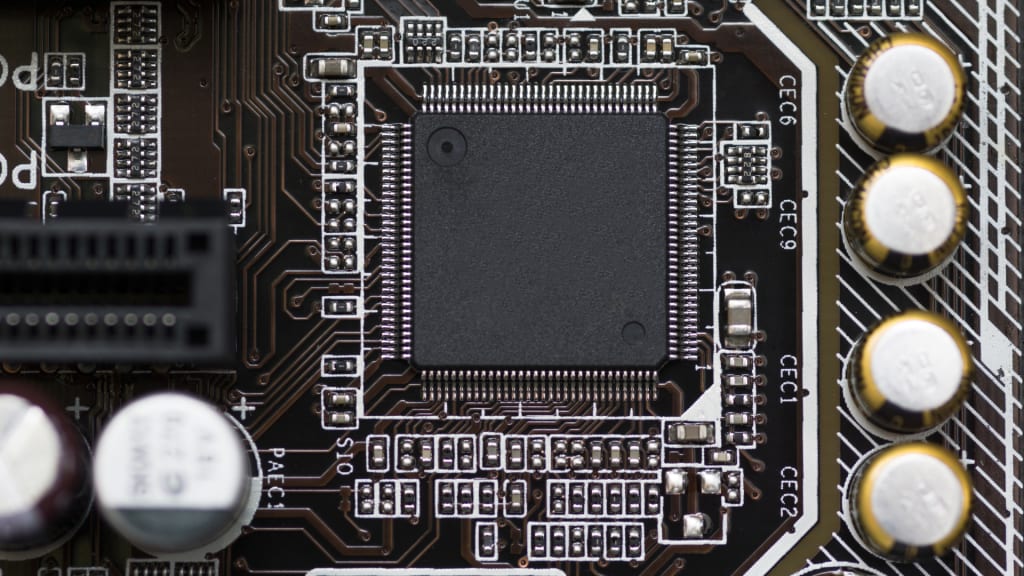
While Nvidia has dominated the market for AI processors for years, a relatively young company from Silicon Valley has set out to rewrite the rules. Cerebras Systems, based in Sunnyvale, California, develops the largest computer chips in the world and made headlines across the entire technology industry in May 2026 with a spectacular stock market debut. Here is a closer look at the company that is challenging an entire industry with a single, enormous chip.
Five Engineers with a Bold Idea
Cerebras was founded in 2016 by five engineers who already knew each other from a previous shared venture: Andrew Feldman (CEO), Gary Lauterbach, Michael James, Sean Lie and Jean-Philippe Fricker. All five had previously worked together at SeaMicro, a company specialising in energy-efficient servers that was acquired by chipmaker AMD in 2012 for around 334 million US dollars. Armed with that experience, they took on a challenge that many experts considered unsolvable: building a working processor that, rather than consisting of a small piece of silicon in the conventional way, uses an entire wafer as a single processor. A wafer is the circular silicon disc from which hundreds of individual chips are normally cut. This concept, known as wafer-scale integration, had been discussed in the semiconductor industry for decades as a theoretical possibility, but was widely regarded as technically unworkable. Cerebras solved the problem in part through software-based redundancy that automatically routes around defective areas of the chip.
A Chip the Size of a Dinner Plate
The centrepiece of Cerebras is the Wafer Scale Engine 3 (WSE-3), currently the largest commercially available processor in the world. To put its dimensions in perspective: the WSE-3 has a surface area of more than 46,000 square millimetres, contains four trillion transistors, and features 900,000 processing cores along with 44 gigabytes of on-chip memory. By comparison, Nvidia's flagship GPU, the B200, is roughly 58 times smaller. This enormous size allows Cerebras to process AI tasks significantly faster: according to the company, up to 15 times faster for inference (applying trained AI models) and up to ten times faster for training new models. Cerebras does not sell individual chips alone, but complete AI systems through its CS-3 platform, which bundles processor, memory, networking and software. The company also offers computing capacity via the cloud, allowing customers to access the technology without having to purchase their own hardware.
Customers, Partnerships and Financials
Cerebras counts some of the biggest names in technology among its most important customers and partners. In the first quarter of 2026, the company signed a multi-year agreement with OpenAI worth more than 20 billion US dollars, under which OpenAI intends to deploy 750 megawatts of Cerebras infrastructure. In March 2026, a partnership with Amazon Web Services followed, giving AWS customers access to Cerebras technology. The company's revenue grew by around 76% in 2025 to 510 million US dollars, with roughly 70% coming from hardware sales and the remainder from cloud services. The profit trajectory is particularly noteworthy. After a loss of nearly half a billion dollars the previous year, Cerebras reported its first net profit in 2025, amounting to around 238 million dollars. Historically, the company was heavily dependent on customers from the United Arab Emirates: the technology group G42 accounted for 85% of revenue in 2024. That share fell sharply to 24% in 2025, pointing to a broader and healthier customer base.
A Milestone for the AI Industry
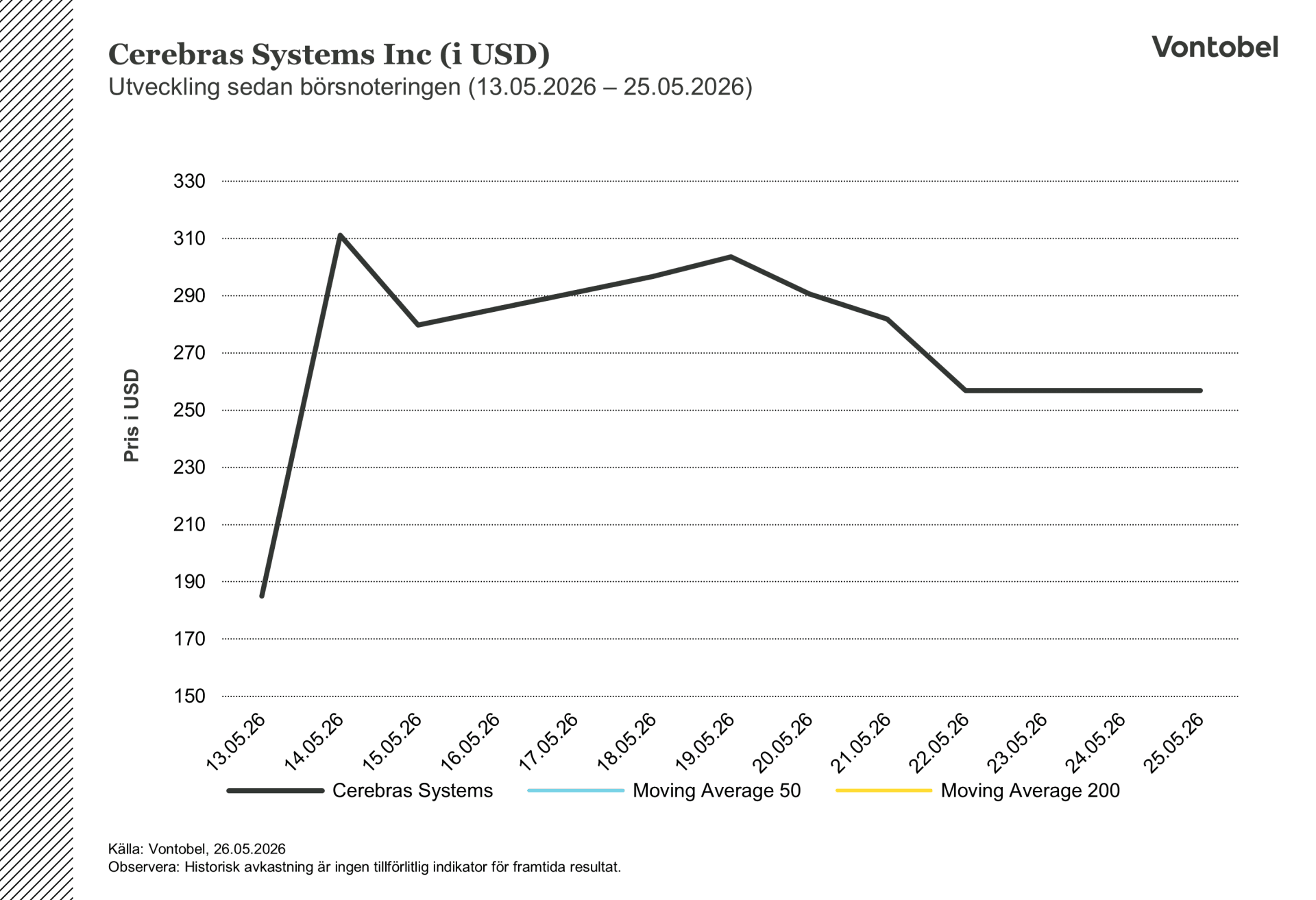
On 14 May 2026, Cerebras listed on the Nasdaq under the ticker symbol CBRS, surpassing all expectations. The company priced its shares at 185 US dollars after the initial price range had been raised several times. At the opening of trading, the stock jumped to 350 dollars, a gain of 90%. In total, Cerebras raised around 5.5 billion dollars. Observers described the listing as the largest semiconductor IPO of all time and an important sentiment test for the valuation of AI companies on public markets. CEO Andrew Feldman, who holds around 4.6% of the company, became a billionaire overnight as a result of the listing. Despite the euphoria, challenges remain. The valuation is extremely high, with a price-to-sales ratio of around 130, the market continues to be dominated by Nvidia, and Cerebras must prove that it can sustain its growth momentum over the long term. One thing, however, is clear: the company from Sunnyvale has transformed itself from an unknown start-up into a serious contender in the global AI race in record time.
Related Products
Cerebras Systems Inc (in USD) Price Development Since IPO
Risks
Credit risk of the issuer:
Investors in the products are exposed to the risk that the Issuer or the Guarantor may not be able to meet its obligations under the products. A total loss of the invested capital is possible. The products are not subject to any deposit protection.
Currency risk:
If the product currency differs from the currency of the underlying asset, the value of a product will also depend on the exchange rate between the respective currencies. As a result, the value of a product can fluctuate significantly.
Market risk:
The value of the products can fall significantly below the purchase price due to changes in market factors, especially if the value of the underlying asset falls. The products are not capital-protected
Product costs:
Product and possible financing costs reduce the value of the products.
Risk with leverage products:
Due to the leverage effect, there is an increased risk of loss (risk of total loss) with leverage products, e.g. Bull & Bear Certificates, Warrants and Mini Futures.
Disclaimer:
This information is neither an investment advice nor an investment or investment strategy recommendation, but advertisement. The complete information on the products (securities) mentioned herein, in particular the structure and risks associated with an investment, are described in the base prospectus, together with any supplements, as well as the final terms relating to the securities. The base prospectus and final terms constitute the solely binding sales documents for the products mentioned herein. It is recommended that potential investors read these documents before making any investment decision. The documents and the key information document are published on the website of the issuer, Vontobel Financial Products GmbH, Bockenheimer Landstrasse 24, 60323 Frankfurt am Main, Germany, on https://prospectus.vontobel.com and are available from the issuer free of charge. The approval of the prospectus should not be understood as an endorsement of the securities. The securities are products that are not simple and may be difficult to understand. This information includes or relates to figures of past performance. Past performance is not a reliable indicator of future performance. This information may only be distributed or published in countries where such distribution or publication is permitted by applicable law. As stated in the relevant base prospectus, the distribution of the securities mentioned in this information is subject to restrictions in certain jurisdictions. This advertisement may not be reproduced or redistributed without prior permission by Vontobel.
© Bank Vontobel Europe AG and / or affiliated companies. All rights reserved.