Hecla Mining: America's oldest silver mine in silver's new golden age

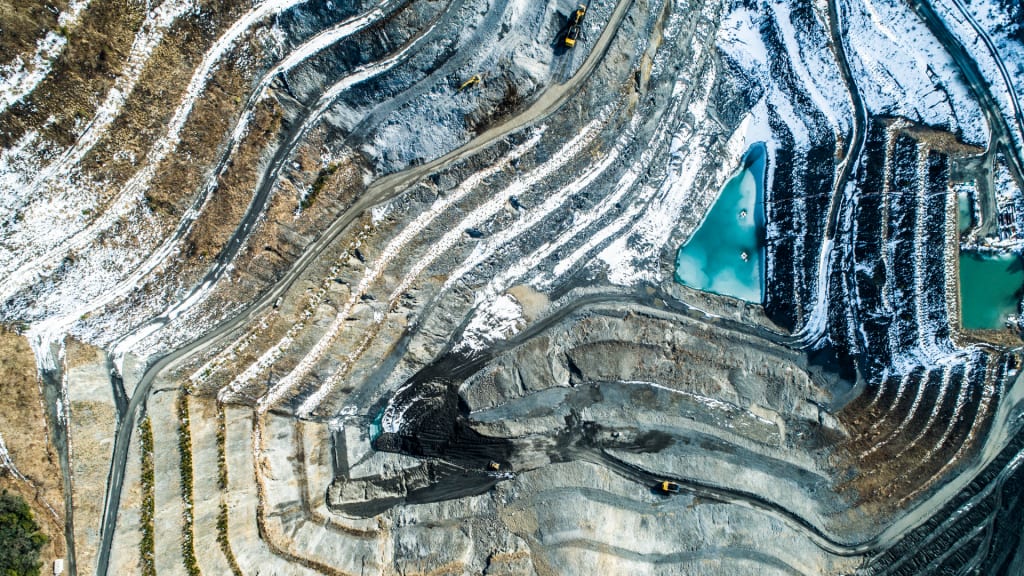
With 135 years of history, a structural silver deficit and an aggressive pivot toward pure-play silver, Hecla Mining has become one of the best ways to gain exposure to silver through a single stock. However, after the share price tripled, it is no longer the silver price but rather the company's ability to deliver on its promises that will determine whether there is more to come.
From Pine Street to the S&P MidCap 400
In 1891, at the height of America's industrial revolution, Hecla Mining Company was founded in Idaho's Silver Valley by Patrick "Patsy" Clark and his partners. The original mine complex produced nearly 9.1 million tons of ore before closing in 1944. However, the company, lived on and was gradually reshaped through a series of acquisitions: Lucky Friday (1958), Greens Creek (1987), Casa Berardi (2013) and most recently Keno Hill through the takeover of Alexco Resource Corp. in the autumn of 2022.Phillips S. Baker Jr. led the company for more than two decades. During his tenure Hecla grew from a single-mine operator into a diversified precious metals producer. In November 2024, Baker was replaced by Rob Krcmarov, a geologist with a long track record at Barrick Gold. The new leadership brought an immediate strategic shift. Within just a few months, Krcmarov announced the sale of the Casa Berardi gold mine, nearly doubled the exploration budget and eliminated the silver-linked variable dividend in order to redirect capital toward growth.
In December 2025, Hecla was added to the S&P MidCap 400, confirming that the company had reached a size and maturity to attract broader institutional capital. Headquarters remain in Coeur d'Alene, Idaho, and all operations are conducted exclusively in the United States and Canada - a significant distinction from its peers. Pan American Silver operates in Mexico, Peru, Bolivia and Argentina. First Majestic Silver is concentrated in Mexico. Hecla’s exclusive operation in stable Western jurisdictions supports a valuation premium and offers investors considerably lower political risk.
Four mines, one strategic direction
Hecla currently operates four mines, but that number will drop to three once the sale of Casa Berardi is completed, which is expected during the first quarter of 2026.
Greens Creek on Admiralty Island in Alaska is the crown jewel. In 2025, the mine accounted for roughly half of Hecla's total silver production. What makes Greens Creek exceptional is that alongside silver, the company also extracts gold, zinc and lead. The revenues from these byproducts are substantial enough to cover all production costs. In other words, Hecla earns money on the byproducts before even counting the silver.
Lucky Friday in Mullan, Idaho, is Hecla's oldest mine and set a production record in 2025 with 5.3 million ounces of silver. With a reserve life of 17 years and ongoing upgrades, it remains a stable, long-term producer delivering just over 30 percent of the company's total silver output (Hecla Mining, Q4 2025 Earnings Release, 17.02.26).
Keno Hill in Yukon, Canada, contains one of the world's most silver-rich ore bodies. Production reached 3.0 million ounces in 2025, the first profitable year under Hecla's ownership. However, the mine has not yet achieved formal "commercial production" due to power outages and permitting complications. Hecla is targeting that milestone by 2027 and plans to increase throughput significantly. Keno Hill is the primary growth lever in the company's plan to reach 20 million ounces of silver per year, but it is also the most uncertain asset in the portfolio (Hecla Mining, Q4 2025 Earnings Release, 17.02.26).
Casa Berardi in Quebec is the gold mine being sold to Orezone Gold for up to $593 million. This transaction is the key to Hecla's transformation into a pure-play silver company and is expected to increase silver's share of revenue from roughly 50 percent to over 73 percent (Hecla Mining, Q4 2025 Earnings Release, 17.02.26).
Beyond the operating mines, Hecla is investing heavily in exploration. The 2026 budget of $55 million is nearly double that of 2025, with a particular focus on Nevada (Hecla Mining, Q4 2025 Earnings Release, 17.02.26). Management envisions a potential restart of the Midas mine around 2030 to 2031.
Record results driven by surging metal prices
Hecla's 2025 results were transformative. The average selling price for silver came in at $45.25 per ounce, a 58 percent increase over 2024, while the average gold price rose 45 percent to $3,490 (Hecla Mining, Q4 2025 Earnings Release, 17.02.26). Revenue reached $1.42 billion and net income increased ninefold to $321 million (Mining Weekly, 18.02.26). Free cash flow went from nearly zero to $310 million, and net debt collapsed from $524 million to just $34 million (Hecla Mining, Q4 2025 Earnings Release, 17.02.26). The company is targeting a fully debt-free balance sheet in 2026.
The stock has responded accordingly. HL rose from around $5.40 at the start of 2025 to $22 by March 2026, a gain of over 300 percent. The share price reached an all-time high of $31.80 on January 23 before correcting alongside silver's February retreat. Market capitalisation stands at roughly $14.75 billion. For 2026, management is guiding for a modest decline in silver production of 15.1 to 16.5 million ounces, reflecting lower expected grades at Greens Creek.
Silver's structural deficit and the green energy cycle
The macro backdrop for silver has rarely been more compelling. The silver price averaged around $28 per ounce in 2024 before breaking out sharply in 2025, surpassing the previous 2011 record of $49 and ultimately reaching $121.62 per ounce on January 29, 2026. After a correction of roughly 40 percent in February, prices stabilised in the $83 to $94 range in early March.
Behind the price action lies a structural supply deficit that has now persisted for five consecutive years. Between 2021 and 2025, the cumulative shortfall totalled an estimated 820 million ounces, equivalent to an entire year of global mine production (Silver Institute, World Silver Survey 2025). Supply has barely grown during this period, primarily because silver is rarely mined as a primary product. An estimated 70 to 80 percent of all silver is produced as a by-product from copper, lead, zinc and gold mines (Silver Institute, 2025). This means that even if the silver price rises sharply, supply cannot respond quickly because production decisions are driven by the profitability of the primary metal.
Industrial demand has set records for the past four years, reaching 680 million ounces in 2024, equivalent to 59 per cent of total consumption (Silver Institute, 16.04.25). In 2025, industrial demand is estimated to have declined slightly to 665 million ounces, primarily due to tariff uncertainty and faster efficiency gains in silver usage per solar panel. However, it remains the second-highest level ever recorded (Silver Institute, 13.11.25). Solar cell manufacturing was the single largest growth driver is, consuming nearly 198 million ounces in 2024, roughly a quarter of all industrial demand (Silver Institute, World Silver Survey 2025). Next-generation N-type solar cells require 50 to 100 per cent more silver per panel compared to older technology. Electric vehicles use roughly twice as much silver as conventional cars, and EV-related demand is projected to reach 90 million ounces per year by 2030.
Another factor driving rapid growth is the AI sector. Silver has the highest electrical conductivity of any metal, making it difficult to replace in high-performance electronics. In the data centers that power AI models, silver is used in chip packaging, internal connections in GPUs and TPUs, cooling systems and power distribution. A typical AI server cluster is estimated to two to three times more silver than a traditional data center, due to its higher power density, more complex cooling systems and greater number of interconnections. According to the Silver Institute and Oxford Economics point to data centers and AI are set to be one of the most important drivers of industrial silver demand for the remainder of the decade.
China's export controls and bank forecasts
However, a decisive new factor emerged on January 1, 2026, when China implemented licence-based export controls on silver, restricting exports to large state-approved companies. Since China controls an estimated 60 to 70 per cent of the global refined silver supply, this policy contributed significantly to the sharp price surge in January 2026. Analysts warn that a 50 percent reduction in Chinese silver exports could add over 5,000 metric tons to the annual deficit.
Bank forecasts for the silver price in 2026 range from $50 to $81 per ounce (J.P. Morgan, 2026). The bull case rests on persistent deficits, Chinese export restrictions, accelerating solar demand and rate cuts from the Federal Reserve. On the downside, the primary risk is extreme volatility. Historically, silver is one of the most volatile commodities, and during sharp price declines industrial users tend to delay purchases in anticipation of lower levels, which can amplify and deepen the downturn. Additionally, tighter monetary policy than expected could strengthen the dollar and weigh on metal prices.
Related Products
Gold's parallel surge adds a tailwind
Gold has seen an even more remarkable rise in value. The spot price crossed $3,000 per ounce for the first time in March 2025, broke through $4,000 in October and ultimately hit an all-time high near $5,600 on January 28, 2026. As of early March 2026, gold trades around $5,178 per ounce, representing a gain of approximately 65 percent over the past year.
Total global gold demand exceeded 5,000 tons for the first time in 2025. Investment demand surged 84 percent to 2,175 tons, with gold ETFs adding 801 tons. Central banks purchased 863 tons, the fourth-largest annual expansion on record, led by Poland, Kazakhstan and Brazil (World Gold Council, Full Year 2025). A World Gold Council survey found that 95 per cent of central banks expect gold reserves to grow over the next 12 months. Gold now accounts for a larger share of central bank reserves than US Treasuries for the first time since 1996.
The macro environment remains highly supportive. The Federal Reserve has cut rates to 3.50 to 3.75 percent, with markets anticipating further reductions. The US dollar fell around 10 per cent in 2025, reaching four-year lows. National debt stands at $38.9 trillion, withannual interest costs exceeding $1.2 trillion. Geopolitical tensions, including the ongoing conflict with Iran, tariff escalation and the BRICS bloc's diversification away from the dollar, continue to drive demand for assets perceived to be stores of value.
For Hecla, the rise in gold has a direct operational impact. When Greens Creek mines ore, the company extracts not only silver but also gold, zinc and lead. The higher the gold price, the more revenue these by-products generate, and the lower the effective production cost per ounce of silver becomes. At the average gold price the company achieved in 2025, Greens Creek's silver AISC turns deeply negative (Hecla Mining, Q4 2025 Earnings Release, 17.02.26). Higher gold prices therefore act as a direct subsidy to Hecla's silver production.
Hecla compared to its peers
Hecla stands out among pure-play silver miners. With a market capitalization of around $14.75 billion, it is the fifth-largest silver mining company in the world and the largest operating exclusively in North America. In terms of production, Hecla delivered 17 million ounces of silver in 2025, which was in line with Coeur Mining ‘s output but behind Pan American Silver's 23 million ounces.
In terms of valuation, Hecla trades at a clear premium to its peers. Its trailing P/E ratio is 45 times earnings, while its price-to-sales ratio is 10 times, compared with Pan American Silver at around 14 times forward earnings and Coeur Mining at around 12 to 15 times EV/EBITDA. A large part of that premium can be attributed to the fact that Hecla operates solely in the US and Canada, that the company is in the midst of a pivot toward pure-play silver, and that Greens Creek has a cost structure that few other silver mines can match.


What should investors consider?
As an investment, Hecla is a stock that amplifies movements in the silver price, offering clear attractions and equally clear risks.
The bull case is based on the following: silver's structural supply deficit which is now in its sixth consecutive year, accelerating industrial demand from the solar, electronic vehicles (EV) and AI sectors, Hecla's path toward producing 20 million ounces per year through the Keno Hill expansion, a nearly debt-free balance sheet and the company's unique positioning as the leading US silver producer in a world increasingly focused on critical mineral supply chains. Inclusion in the S&P MidCap 400 index attracts passive fund investment, and the exploration portfolio offers potential for new discoveries.
The bear case revolves around several factors. Commodity price sensitivity is extreme. At current all-in sustaining costs (AISC) of $11 to $16 per ounce, every $5 decline in the silver price across 17 million ounces would erase approximately $85 million in revenue. A return to $30 per ounce, entirely plausible given silver's historical volatility, would halve revenue and potentially eliminate profitability. Keno Hill, the most important growth catalyst, is at the same time the most uncertain asset in the portfolio. The mine has repeatedly suffered from power outages and permitting delays, and power disruptions alone cost an estimated 130,000 ounces of lost production in 2025 (Mining Weekly, 14.02.25). And the valuation leaves little room for disappointment. At a P/E of 45 times, an earnings miss or production shortfall could trigger a sharp de-rating.
Conclusion: a leveraged bet on silver's next chapter
Hecla is not a stock one buys for what the company has already achieved, but rather a speculative investment based on the belief that silver prices will remain high or increase further. If silver consolidates above $50, Hecla will generate exceptional cash flow and grow into its valuation. However, if silver were to revisit the $25 to $30 range that prevailed just 18 months ago, the equation would change dramatically. For investors with a bullish silver view who accept mining-sector volatility, Hecla remains the most compelling pure-play option in North America. For those uncertain about silver's direction, the premium valuation calls for caution.
Vontobel offers a broad range of leveraged products with Hecla Mining as the underlying, giving investors the opportunity to take both long and short exposure based on their own market view.
Risks
Credit risk of the issuer:
Investors in the products are exposed to the risk that the Issuer or the Guarantor may not be able to meet its obligations under the products. A total loss of the invested capital is possible. The products are not subject to any deposit protection.
Currency risk:
If the product currency differs from the currency of the underlying asset, the value of a product will also depend on the exchange rate between the respective currencies. As a result, the value of a product can fluctuate significantly.
Market risk:
The value of the products can fall significantly below the purchase price due to changes in market factors, especially if the value of the underlying asset falls. The products are not capital-protected
Product costs:
Product and possible financing costs reduce the value of the products.
Risk with leverage products:
Due to the leverage effect, there is an increased risk of loss (risk of total loss) with leverage products, e.g. Bull & Bear Certificates, Warrants and Mini Futures.
Disclaimer:
This information is neither an investment advice nor an investment or investment strategy recommendation, but advertisement. The complete information on the products (securities) mentioned herein, in particular the structure and risks associated with an investment, are described in the base prospectus, together with any supplements, as well as the final terms relating to the securities. The base prospectus and final terms constitute the solely binding sales documents for the products mentioned herein. It is recommended that potential investors read these documents before making any investment decision. The documents and the key information document are published on the website of the issuer, Vontobel Financial Products GmbH, Bockenheimer Landstrasse 24, 60323 Frankfurt am Main, Germany, on https://prospectus.vontobel.com and are available from the issuer free of charge. The approval of the prospectus should not be understood as an endorsement of the securities. The securities are products that are not simple and may be difficult to understand. This information includes or relates to figures of past performance. Past performance is not a reliable indicator of future performance. This information may only be distributed or published in countries where such distribution or publication is permitted by applicable law. As stated in the relevant base prospectus, the distribution of the securities mentioned in this information is subject to restrictions in certain jurisdictions. This advertisement may not be reproduced or redistributed without prior permission by Vontobel.
© Bank Vontobel Europe AG and / or affiliated companies. All rights reserved.