Cash keeps flowing, but Swedish broadband stalls

Tele2 is a Swedish telecommunications company offering mobile services, fixed broadband, TV and business connectivity in Sweden and the three Baltic states: Lithuania, Latvia and Estonia. Competition is intense, and margins depend on cost control rather than volume alone. This covers the third quarter of 2026 and was published today under leadership of the company’s new CEO Nicholas Högberg, who took over earlier this year following Jean Marc Harion’s departure.
The main takeaway
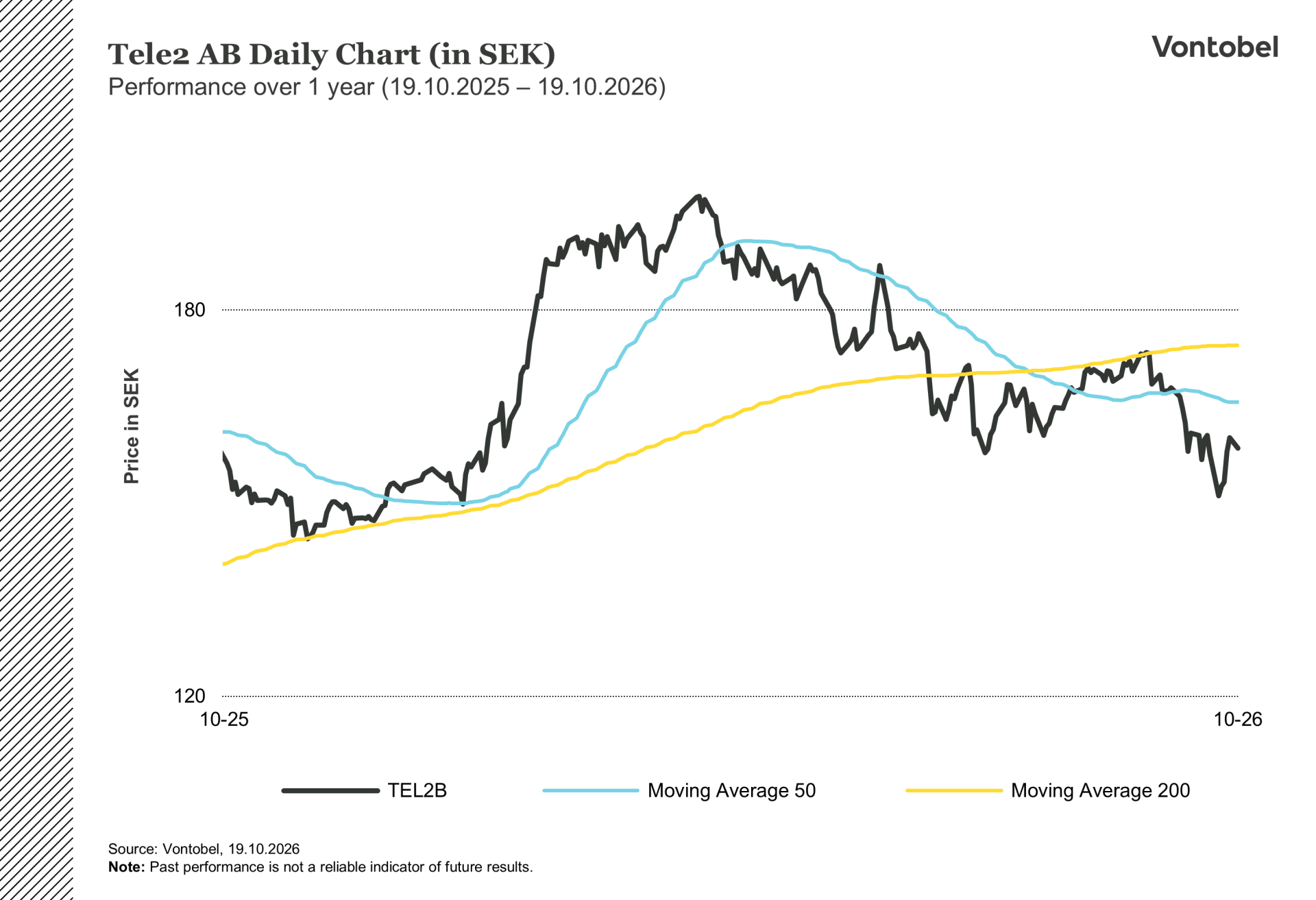
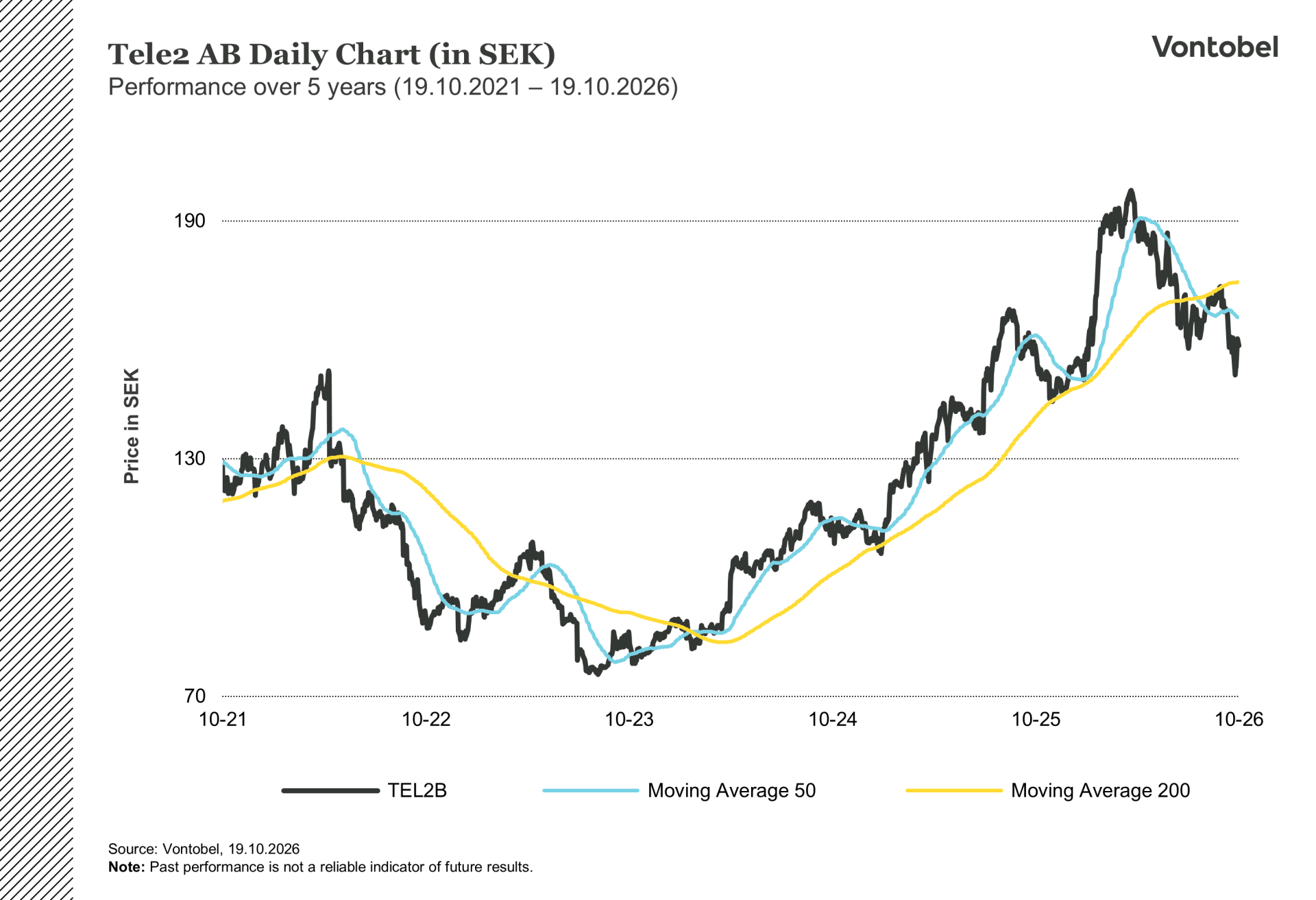
The main takeaway is that the main story is cash flow. Equity free cash flow (the money left after operating and investing in the business, which can be paid to shareholders or used to reduce debt) reached SEK 2.3 billion in the quarter, bringing the total for the past twelve months to SEK 9.69 per share. This represents a significant increase from SEK 8.99 a year ago. Underlying EBITDAaL (a measure of operating profit that accounts for lease costs but excludes exceptional items) grew by 3% organically. That is solid growth, but a clear slowdown from the 11% reported in Q1. The company has narrowed its guidance to 4- 5% EBITDAaL growth for the full year, a modest adjustment to an already conservative target. While Tele2 is generating strong cash flow and maintaining a healthy balance sheet, it is struggling to make progress in the Swedish consumer broadband market.
Key Figures from Tele2 Q3 2026 report
Revenue was SEK 7.6 billion, up 2% organically. Underlying EBITDAaL came in at SEK 3.1 billion, with the margin holding at 41%. In reported terms, underlying EBITDAaL was unchanged from a year earlier, but it grew 3% organically when the effect of the Baltic tower transaction is excluded. Completed earlier in 2026, the deal saw Tele2 sell 50% of its Baltic tower infrastructure. This changed the cost structure and slightly reduced reported profitability, even though the underlying business improved. The standout figure was equity free cash flow, which was up nearly SEK 500 million from the same quarter last year at SEK 2.3 billion. Financial leverage (economic net debt relative to underlying EBITDAaL) remained at 1.5 times, which is well within the levels that credit rating agencies consider to be investment grade. Capital expenditure as a percentage of sales decreased to 8%, comfortably below the original annual target of 10-11% for the full year, partly reflecting a slower 5G rollout and delayed hardware deliveries.
What others may miss
At first glance, the reported EBITDAaL growth of 0% suggests that the business has stalled. However, a closer look reveals that this reflects the accounting impact of the Baltic tower transaction rather than any deterioration in performance. Tele2 previously owned the towers outright. It now leases them back, adding lease costs that affect reported EBITDAaL. Excluding this effect, organic growth was 3%.
A more concerning development is the decline in Swedish fixed broadband, where revenue, which fell by 3% in the quarter, while the subscriber base shrank by a further 6,000 RGUs. Tele2 has explicitly chosen not to compete with the most aggressive broadband prices in the market. This is a defensible medium-term strategy because it protects margins, but it is costing the company subscribers in the short term. The strategy rests on network quality and service eventually winning customers back. Tele2’s top ranking for mobile consumer satisfaction in the SKI survey suggests that this approach is not entirely misplaced. Whether it will work in broadband sector remains to be seen.
Sector and market context
Nordic telecoms companies have generally been operating in an environment of low growth and intense competition. The Baltic operations are the exception. All three Baltic markets, Lithuania, Latvia and Estonia, delivered revenue growth in local currency, supported by price increases and a shift in the customer base towards those spending more on postpaid contracts. Lithuania’s 5G network was independently ranked the fastest in the country, while Estonia’s customer service was voted the best in the market. Although these are small markets, they contribute disproportionately to profitability.
In Sweden, broadband competition is pushing operators towards value-added services and efforts to differentiate their networks, rather than price cuts. Given Tele2’s track record of network investment, this suits them better than some of their rivals.
What to watch next
The full year report is due on 27 January 2027. The key question is whether broadband in Sweden Consumer stabilises. Fixed broadband revenue has now declined for two consecutive quarters. ASPU (the average amount spent per customer)has remained relatively stable, but pressure on volumes is increasing. The store expansion programme, which has seen nine new locations open since January, is clearly helping the mobile business, it has not yet halted the decline in broadband.
The newly appointed Chief Commercial Officer, Vahdat Zehtab, is expected to join by June 2027 at the latest. This means the role will be left unfilled while the commercial strategy is being managed through a critical period. The emergency network contract, which was signed after the end of the quarter, will provide an important source of long-term stability for the business Any additional revenue that it generates will be worth monitoring. The debt has an average maturity of 2.6 years and an average interest rate of 2.8%, so there is currently no refinancing pressure, although the time available is gradually reducing.
Source Tele2 Q3 report.
Risks
Credit risk of the issuer:
Investors in the products are exposed to the risk that the Issuer or the Guarantor may not be able to meet its obligations under the products. A total loss of the invested capital is possible. The products are not subject to any deposit protection.
Currency risk:
If the product currency differs from the currency of the underlying asset, the value of a product will also depend on the exchange rate between the respective currencies. As a result, the value of a product can fluctuate significantly.
Market risk:
The value of the products can fall significantly below the purchase price due to changes in market factors, especially if the value of the underlying asset falls. The products are not capital-protected
Product costs:
Product and possible financing costs reduce the value of the products.
Risk with leverage products:
Due to the leverage effect, there is an increased risk of loss (risk of total loss) with leverage products, e.g. Bull & Bear Certificates, Warrants and Mini Futures.
External author:
This information is in the sole responsibility of the guest author and does not necessarily represent the opinion of Bank Vontobel Europe AG or any other company of the Vontobel Group. This information is sponsored by Bank Vontobel Europe AG, which may be a counterparty to transactions involving the financial instruments discussed in this information. The further development of the index or a company as well as its share price depends on a large number of company-, group- and sector-specific as well as economic factors. When forming his investment decision, each investor must take into account the risk of price losses. Please note that investing in these products will not generate ongoing income.
The products are not capital protected, in the worst case a total loss of the invested capital is possible. In the event of insolvency of the issuer and the guarantor, the investor bears the risk of a total loss of his investment. In any case, investors should note that past performance and/or analysts' opinions are no adequate indicator of future performance. The performance of the underlyings depends on a variety of economic, entrepreneurial and political factors that should be taken into account in the formation of a market expectation.
Disclaimer:
This information is neither an investment advice nor an investment or investment strategy recommendation, but advertisement. The complete information on the products (securities) mentioned herein, in particular the structure and risks associated with an investment, are described in the base prospectus, together with any supplements, as well as the final terms relating to the securities. The base prospectus and final terms constitute the solely binding sales documents for the products mentioned herein. It is recommended that potential investors read these documents before making any investment decision. The documents and the key information document are published on the website of the issuer, Vontobel Financial Products GmbH, Bockenheimer Landstrasse 24, 60323 Frankfurt am Main, Germany, on https://prospectus.vontobel.com and are available from the issuer free of charge. The approval of the prospectus should not be understood as an endorsement of the securities. The securities are products that are not simple and may be difficult to understand. This information includes or relates to figures of past performance. Past performance is not a reliable indicator of future performance. This information may only be distributed or published in countries where such distribution or publication is permitted by applicable law. As stated in the relevant base prospectus, the distribution of the securities mentioned in this information is subject to restrictions in certain jurisdictions. This advertisement may not be reproduced or redistributed without prior permission by Vontobel.
© Bank Vontobel Europe AG and / or affiliated companies. All rights reserved.