Gold and Silver Under Pressure: Factors Behind the Recent Price Decline

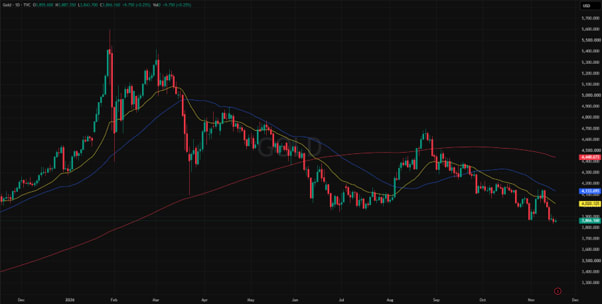
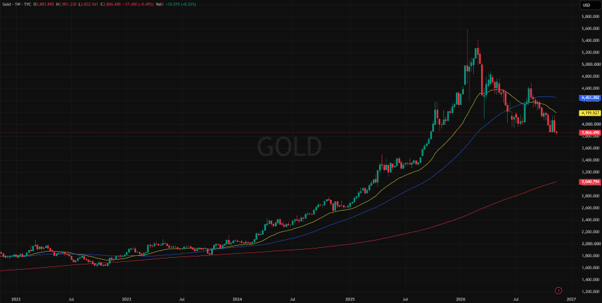
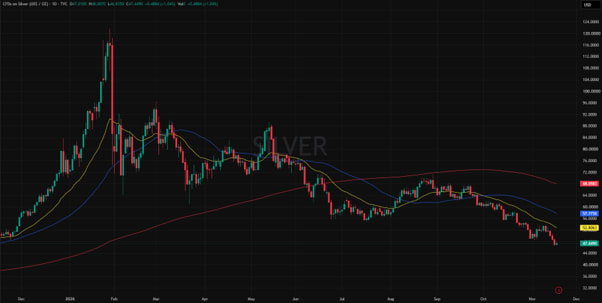
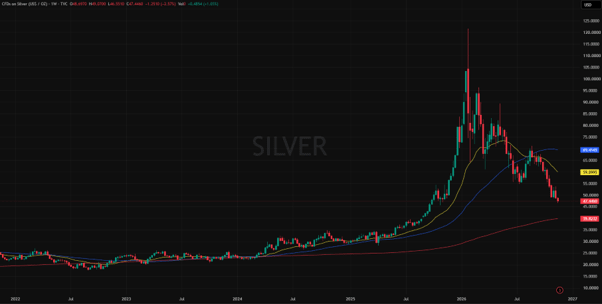
The precious metals market has experienced significant price movements this year. After strong gains earlier in the year, gold declined from its January 31 percent peaks and recently traded in the vicinity of 3,850 – 3,880 per ounce. The correction in silver has been even more severe, with the price falling to around the $47 level, a decline of roughly 60 percent from its January highs of over $120. The recent development may appear noteworthy given that precious metals are often regarded by market participants as assets that can attract investor interest during periods of elevated inflation, geopolitical uncertainty or increased volatility in financial markets. Nevertheless, gold and silver prices have recently come under pressure alongside other asset classes. The following factors are frequently cited by market observers as potential contributors to this development.
Drivers Frequently Associated with the Decline in Precious Metals
The corrective movement in gold and silver is not driven by a single piece of news; rather, it is influenced by three mutually reinforcing factors:
Interest rate expectations and opportunity costs: The US Consumer Price Index (CPI) increased by 0.4 percent month-on-month in October. compared with market expectation of 0.3 percent. Against this backdrop, market is now pricing in a greater than 90 percent probability of an interest rate hike by the US Federal Reserve (Fed) in December. Since gold and silver do not pay interest or dividends, rising real interest rates make cash, as well as US government bonds, which yield around five percent, making them significantly more attractive alternatives.
Strengthening US dollar: Hawkish interest rate expectations have also supported the US dollar. Since precious metals are typically traded and priced in dollars, a stronger currency makes gold and silver more expensive for buyers in other currency zones.
Liquidity needs and reduction of leveraged positions: As the stock market, particularly the technology sector, has experienced a sharp decline during the autumn, investors and funds using leverage have been forced to sell their most liquid assets to meet margin requirements or manage portfolio risks.
Gold under pressure despite continued Central Bank demand
Although gold prices have declined significantly in recent months, developments in the physical market present a different picture. Market observers note that a considerable part of the recent selling pressure has originated primarily from the derivatives markets. At the same time, central banks reportedly increased their gold purchases following the decline from earlier price highs. According to estimates published by the World Gold Council, central banks purchased 321 tonnes of gold in the third quarter, an increase of 42 percent compared to the previous year. Of this amount, 120 tonnes represent officially reported purchases, while the remainder is the WGC’s estimate of unreported acquisitions. Since the decline in November falls within the fourth quarter, upcoming statistics may provide further indications as to whether this trend continued during that period.
However, from a technical analysis perspective, gold prices have recently traded below several commonly observed key moving averages (EMA25, SMA50, SMA200). This week, the price also moved below lows established in October 2025, which are situated in the vicinity of $3,880. Technical analysts may consider this level relevant for future price developments. Conversely, a move above shorter-term moving averages and above the USD 4,000 level could be interpreted by some market participants as a sign of improving market sentiment.
Related Products
GOLD, 1-year chart
GOLD, 5-year chart
Silver remains under pressure amid industrial demand concerns
The significantly sharp decline in silver compared with gold has pushed the gold-to-silver ratio back above 80. One factor frequently cited by market participants to explain this divergence is the differing demand structures of the two metals. While gold is often viewed primarily as an investment and a reserve asset, a substantial share of silver demand originates from industrial sectors, including the electronics and the solar panel industry. As higher interest rates and energy costs raise concerns about a slowdown in global industrial production and investment, silver may be affected both by factors influencing precious metals markets and by developments in industrial demand.
Recent price movements illustrate the comparatively high volatility often associated with silver. Following a strong increase earlier in the year, the price has declined significantly and recently fell below USD 50 for the first time since autumn 2025. In addition, silver has traded below several commonly observed moving averages, including the EMA25, SMA50 and SMA200. Some technical analysts may interpret this configuration as being consistent with continued downward price momentum.
Some technical analysts identify the area around USD 46 as a price zone that may attract market attention, as it corresponds to levels observed during autumn 2025. Market participants also monitor developments in gold prices and US Treasury yields, among other factors, when assessing the outlook for the silver market. Future price developments remain uncertain and may differ materially from current expectations.
Related Products
SILVER, 1-year chart
SILVER, 5-year chart
Summary
The recent correction in gold and silver highlightsthe importance of considering the interest rate environment, and its implicationswhen assessing developments in precious analyzing the metals markets. Higher interest rates may affect the relative attractiveness of non-yielding assets such as gold and silver compared with interest-bearing investments.
At the same time, different segments of the market have exhibited varying trends. While some investors have reduced exposure to precious metals-related financial instruments, central banks have continued to increase their gold holdings according to data published by the World Gold Council.
Market participants continue to monitor a range of factors that may influence precious metals prices, including inflation developments, monetary policy expectations, interest rates and currency movements. Future price developments remain uncertain and may be influenced by numerous economic, financial and geopolitical factors.
Indicators shown on the charts:
- SMA200: 200-Day Moving Average, red.
- SMA50: 50-Day Moving Average, blue.
- EMA25: 25-Day Exponential Moving Average, yellow.
Risks
Credit risk of the issuer:
Investors in the products are exposed to the risk that the Issuer or the Guarantor may not be able to meet its obligations under the products. A total loss of the invested capital is possible. The products are not subject to any deposit protection.
Currency risk:
If the product currency differs from the currency of the underlying asset, the value of a product will also depend on the exchange rate between the respective currencies. As a result, the value of a product can fluctuate significantly.
Market risk:
The value of the products can fall significantly below the purchase price due to changes in market factors, especially if the value of the underlying asset falls. The products are not capital-protected
Product costs:
Product and possible financing costs reduce the value of the products.
Risk with leverage products:
Due to the leverage effect, there is an increased risk of loss (risk of total loss) with leverage products, e.g. Bull & Bear Certificates, Warrants and Mini Futures.
External author:
This information is in the sole responsibility of the guest author and does not necessarily represent the opinion of Bank Vontobel Europe AG or any other company of the Vontobel Group. This information is sponsored by Bank Vontobel Europe AG, which may be a counterparty to transactions involving the financial instruments discussed in this information. The further development of the index or a company as well as its share price depends on a large number of company-, group- and sector-specific as well as economic factors. When forming his investment decision, each investor must take into account the risk of price losses. Please note that investing in these products will not generate ongoing income.
The products are not capital protected, in the worst case a total loss of the invested capital is possible. In the event of insolvency of the issuer and the guarantor, the investor bears the risk of a total loss of his investment. In any case, investors should note that past performance and / or analysts' opinions are no adequate indicator of future performance. The performance of the underlyings depends on a variety of economic, entrepreneurial and political factors that should be taken into account in the formation of a market expectation.
Disclaimer:
This information is neither an investment advice nor an investment or investment strategy recommendation, but advertisement. The complete information on the products (securities) mentioned herein, in particular the structure and risks associated with an investment, are described in the base prospectus, together with any supplements, as well as the final terms relating to the securities. The base prospectus and final terms constitute the solely binding sales documents for the products mentioned herein. It is recommended that potential investors read these documents before making any investment decision. The documents and the key information document are published on the website of the issuer, Vontobel Financial Products GmbH, Bockenheimer Landstrasse 24, 60323 Frankfurt am Main, Germany, on https://prospectus.vontobel.com and are available from the issuer free of charge. The approval of the prospectus should not be understood as an endorsement of the securities. The securities are products that are not simple and may be difficult to understand. This information includes or relates to figures of past performance. Past performance is not a reliable indicator of future performance. This information may only be distributed or published in countries where such distribution or publication is permitted by applicable law. As stated in the relevant base prospectus, the distribution of the securities mentioned in this information is subject to restrictions in certain jurisdictions. This advertisement may not be reproduced or redistributed without prior permission by Vontobel.
© Bank Vontobel Europe AG and / or affiliated companies. All rights reserved.