Brent’s Back Above $100: What’s Driving the Market?

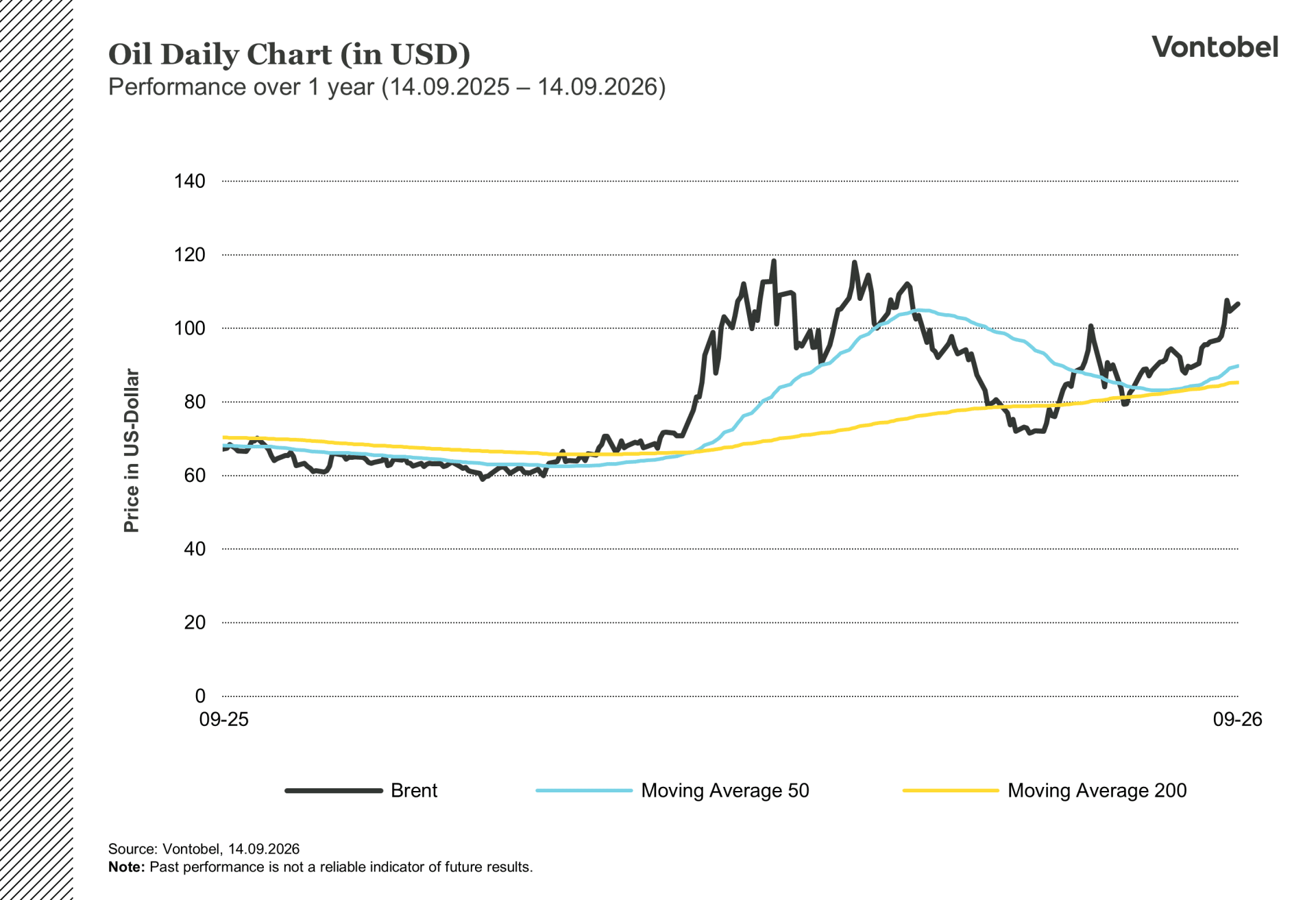
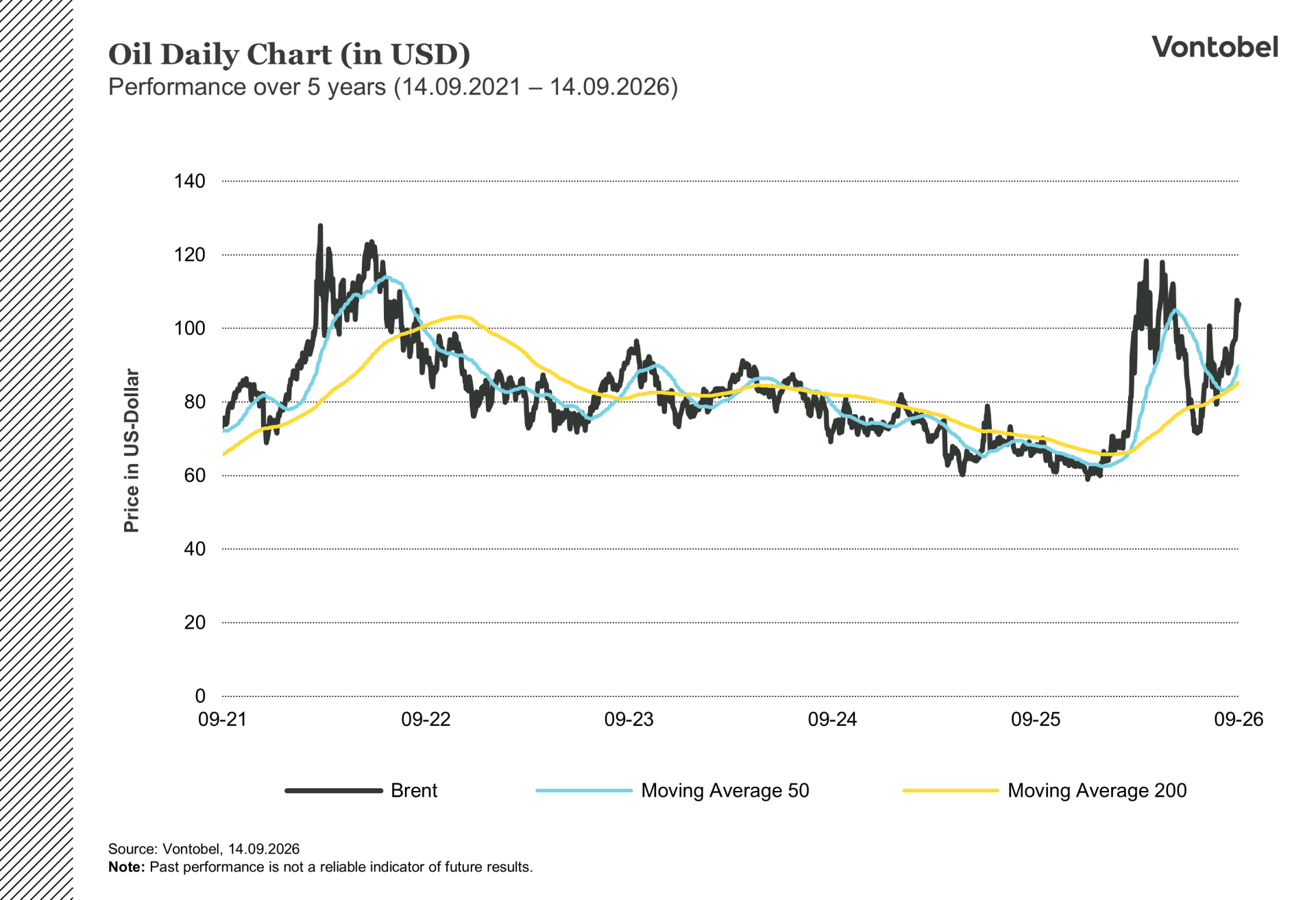
Since the strikes on Iran earlier this year, Brent crude has remained highly sensitive to geopolitical developments in the Middle East, reaching a 2026 high of around $126 per barrel in March before retreating, though still trading roughly 30% higher year-to-date at the start of September. Volatility has been driven by concerns over global oil supply, production headlines and shipping disruptions, particularly given the importance of the Strait of Hormuz, through which around 20% of global oil supply typically passes. Looking ahead, analyst forecasts remain widely dispersed, with some expecting Brent to fall toward $60-$65 per barrel while others see prices remaining closer to $80, highlighting ongoing uncertainty around supply conditions, demand trends and geopolitical risks.
Brent’s Volatile 2026
Geopolitical developments in the Middle East have been the dominant driver of Brent crude in 2026. Following the escalation of the conflict in February and disruptions affecting the Strait of Hormuz, market participants reassessed the potential implications for global oil supply. Given that approximately one fifth of the world's oil supply normally transits through the waterway, concerns regarding supply shortages rose rapidly.
As uncertainty surrounding supply conditions increased, Brent climbed sharply and reached a high of approximately $126 per barrel in March, its highest level of the year. At the time, market expectations reflected the possibility of further price increases should disruptions to crude exports from the Persian Gulf intensify. However, such scenarios did not materialize.
Despite these concerns, Brent never reached some of the more aggressive forecasts that emerged during the height of the crisis. Strategic reserve releases, adjustments in global trade flows and weaker crude demand from parts of Asia helped offset a portion of the supply shock. As a result, oil prices retreated during the second quarter even though geopolitical tensions remained elevated.
Throughout the year, Brent has remained highly sensitive to developments affecting the Persian Gulf region. Headlines relating to shipping security, energy infrastructure, diplomatic developments and export flows have periodically contributed to elevated volatility. While Brent remains above levels seen before the escalation of the conflict, the benchmark has traded substantially below its spring highs as the market has attempted to balance geopolitical risks against evolving supply and demand conditions.
Related Products
Why brent is the benchmark
Although Brent crude is often referred to as "the oil price", it is one of several crude benchmarks traded globally. Alongside West Texas Intermediate (WTI), Brent serves as a key benchmark for crude oil markets in the Atlantic Basin and is widely used as a reference price for internationally traded crude.
Brent's position as the leading global benchmark is primarily linked to market structure, liquidity and transparency. Rather than representing the largest share of global oil production, its importance stems from the highly liquid futures market built around the benchmark. These contracts facilitate price discovery and attract a broad range of participants, including producers, refiners, traders and institutional investors.
As a result, Brent is widely regarded as the most closely followed oil benchmark globally and is often used as a reference point for international crude oil markets. However, as the events of 2026 demonstrated, developments in other parts of the oil market can at times paint a very different picture.
Brent is Not the Entire Oil Market
The disruption of Gulf oil exports in 2026 highlighted that important signals can emerge outside the Brent market. In Asia, Oman and Dubai crude serve as key pricing references for physical oil cargoes, making them particularly sensitive to regional supply disruptions.
According to market estimates, Asian buyers typically import around 11.2 million barrels of crude oil per day through the Strait of Hormuz. As uncertainty surrounding Gulf exports increased, refiners faced the prospect of securing replacement barrels in an already constrained market. Oman and Dubai crude traded at significantly stronger premiums than Atlantic Basin benchmarks, which market participants generally attributed to concerns regarding the availability of physical supply.
A key reason for this divergence lies in the different roles played by these benchmarks. Brent and WTI are primarily represented through highly liquid futures contracts that serve as global pricing references, while Oman and Dubai crude are more directly linked to physical oil cargoes delivered into Asia. During periods of market stress, physical crude markets can therefore exhibit stronger signs of scarcity than globally traded futures benchmarks.
Transportation dynamics also contributed to the divergence. Oil shipped from the Persian Gulf reaches Asian buyers considerably faster than European destinations, meaning disruptions to Gulf exports affected Asian refiners more directly and more immediately. At the same time, Brent and WTI remained partially cushioned by inventories, strategic reserve releases and alternative sources of Atlantic Basin supply.
The divergence between Middle Eastern crude grades and Atlantic Basin benchmarks suggested some aspects of supply stress may have been more visible in regional physical crude markets than in global benchmark prices. While Brent remained the benchmark most widely followed by investors, regional physical crude markets at times reflected stronger indications of supply tightness.
Outlook
As the market moves towards year-end, developments in the Middle East continue to influence oil market sentiment. While emergency stock releases helped offset part of the initial supply shock earlier in 2026, a significant portion of those reserves have already been utilized, reducing one potential buffer against future disruptions.
At the same time, geopolitical risks remain elevated. Recent reports of attacks targeting Saudi energy infrastructure, alongside continued tensions involving Iran and shipping routes in the Persian Gulf, have highlighted the vulnerability of regional energy supply chains. Uncertainty surrounding future export flows continues to influence market expectations.
Brent has responded accordingly, rising back above $100 per barrel as of early September after trading closer to $80 during parts of the summer. Future price developments may be influenced by a range of factors, including geopolitical events, supply conditions and global demand trends.
While Wall Street forecasts vary considerably, most expectations remain centered around oil prices moderating from current levels over the coming quarters. The developments observed in 2026 highlighted that Brent prices may not always reflect all regional dynamics affecting physical crude markets. Understanding developments in regional crude benchmarks and physical supply chains may prove equally important when assessing the outlook for oil prices.
Risks
Credit risk of the issuer:
Investors in the products are exposed to the risk that the Issuer or the Guarantor may not be able to meet its obligations under the products. A total loss of the invested capital is possible. The products are not subject to any deposit protection.
Currency risk:
If the product currency differs from the currency of the underlying asset, the value of a product will also depend on the exchange rate between the respective currencies. As a result, the value of a product can fluctuate significantly.
Market risk:
The value of the products can fall significantly below the purchase price due to changes in market factors, especially if the value of the underlying asset falls. The products are not capital-protected
Product costs:
Product and possible financing costs reduce the value of the products.
Risk with leverage products:
Due to the leverage effect, there is an increased risk of loss (risk of total loss) with leverage products, e.g. Bull & Bear Certificates, Warrants and Mini Futures.
Disclaimer:
This information is neither an investment advice nor an investment or investment strategy recommendation, but advertisement. The complete information on the products (securities) mentioned herein, in particular the structure and risks associated with an investment, are described in the base prospectus, together with any supplements, as well as the final terms relating to the securities. The base prospectus and final terms constitute the solely binding sales documents for the products mentioned herein. It is recommended that potential investors read these documents before making any investment decision. The documents and the key information document are published on the website of the issuer, Vontobel Financial Products GmbH, Bockenheimer Landstrasse 24, 60323 Frankfurt am Main, Germany, on https://prospectus.vontobel.com and are available from the issuer free of charge. The approval of the prospectus should not be understood as an endorsement of the securities. The securities are products that are not simple and may be difficult to understand. This information includes or relates to figures of past performance. Past performance is not a reliable indicator of future performance. This information may only be distributed or published in countries where such distribution or publication is permitted by applicable law. As stated in the relevant base prospectus, the distribution of the securities mentioned in this information is subject to restrictions in certain jurisdictions. This advertisement may not be reproduced or redistributed without prior permission by Vontobel.
© Bank Vontobel Europe AG and / or affiliated companies. All rights reserved.